• About John M Clum
    • About John M. Clum

John Clum's Theater, Music, Film and Media Reviews

  • MALE LOVE IN TWO JAPANESE FILMS

    February 19th, 2026

    Among the unexpected delights of our travels to Japan were visits to out-of-the-way small towns inhabited mostly by elderly people, the result of young people moving to the city for employment. The town of Joge, near Hiroshima, once was a prosperous town because of the silver trade. It even has a lovely 19th century Kabuki theatre. Now the senior inhabitants welcome tourist groups with martial arts demonstrations, tours of the lovely little town, and lunch at a cozy restaurant. There is also an antique store that is a treasure trove for collectors of Japanese art. On another trip, we visited a country village where locals put on a puppet show and taught us how to create a Japanese lunch. We also visited the town’s famous creator of indigo fabrics using traditional methods. Japan has a number of these old villages whose population has dwindled to a handful of elderly people. This is not surprising in a country where one-third of the population is over sixty-five.
    Screenshot

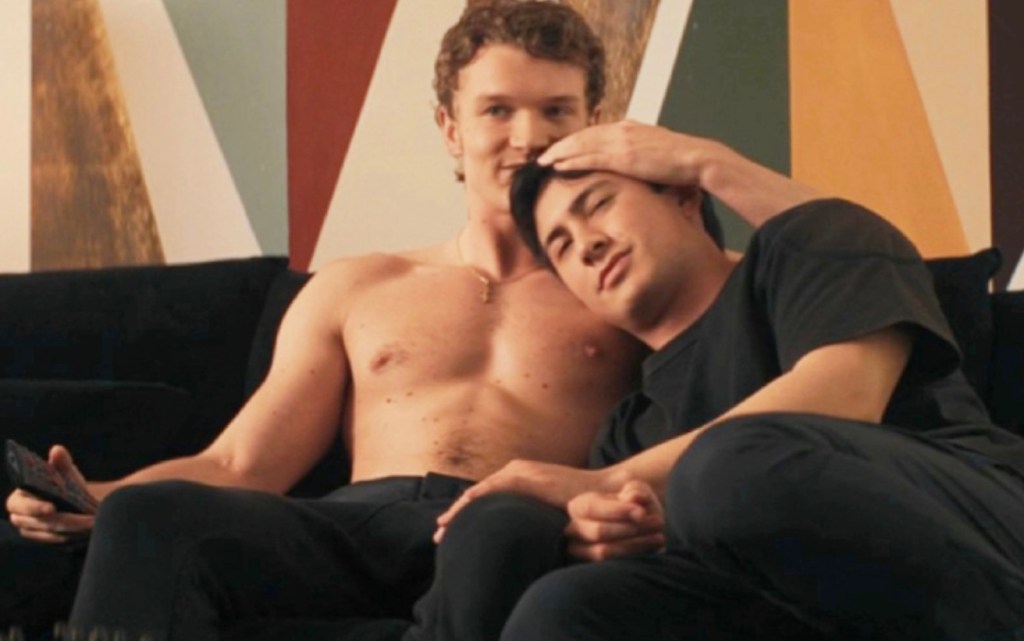
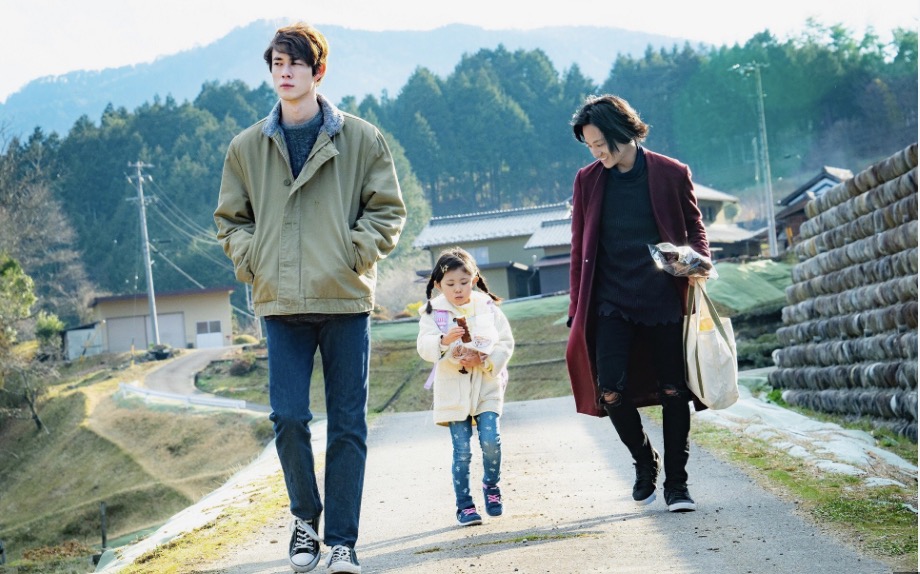
    Lovers Shun and Nagisa and Nagisa’s daughter in HIS

    I thought about our visits to these towns as I watched the excellent lgbt-themed film His (available on YouTube). I had seen the 2020 film a couple of years ago but was recently drawn back to it. I have not seen another Japanese film that so deftly combines the prejudice against gay people in Japan with the problems of Japanese working women. 

    The film begins with two young men, Shun and Nagisa, in bed together. A sense of happy intimacy is broken when Nagisa says that he wants them to break up. Cut to Shun waking up years later in his Spartan house in a small town. We see him silently go through his morning routine of picking vegetables from his garden, trading some with a kind old man for meat, and reading by the river. Shun had a job in Tokyo but retreated when word got out about his former relationship with Nagisa. Because of his own shame, he couldn’t deal with the homophobic taunting from his colleagues. 

    Shun’s quiet routine is broken when he returns home to find Nagisa waiting outside with his six-year-old daughter, Sora. After they broke up, Nagisa, who panicked at the prospect of a gay life that would not be accepted, moved to Australia and married Rena. Since Sora’s birth, he has been househusband while she developed a career as an interpreter. This gender reversal is highly unusual in Japan. Eventually Nagisa accepted that his attraction was to men. After a spate of promiscuity, he realized that he really wanted a full relationship with Shun, who can’t resist allowing Nagisa and Sora to move in with him. 

    When Rena takes Sora back to Tokyo with her, Shun and Nagisa renew their sexual relationship. Rena has difficulty balancing the demands of her job with raising Sora who returns to her father and Shun in the village. The girl inadvertently outs her father and his lover to the elderly villagers. 

    A major element of the film is Shun’s and Nagisa’s acceptance of their homosexuality. They both have suffered from internalized homophobia but find this small community one in which they can accept themselves and be accepted. We see through Nagisa and Rena’s custody battle that such acceptance is not as true in the legal world. Nor is it easy for a single mother like Rena to receive the support of the legal system. The assumption of Japanese society is that a man is the breadwinner and a woman rears the children. The cards seem to be stacked against both parents in their custody battle. Six-year-old Sora just wants to be with both parents and Shun. 

    The slow pace of His—typical of many Asian films—might irritate some viewers, but Rikiya Imaizumi’s direction gives the viewer a sense of the relaxed pace of life in a rural community. The pace also allows the viewer to concentrate on characters’ reactions to situations. The characters aren’t big talkers, so we depend on body language and facial expression. 

    There are a number of heart-rending moments  the film, which is as compassionate with the female characters as it is with the gay lovers. We watch Rena gradually get better at mothering. She also realizes that she will have to find a place for her ex-husband and his partner in her and Sora’s lives.

    Essentially the film is about three people growing up. Shun cannot spend his life avoiding people or denying his sexual orientation. Nagisa has to accept the consequences of his love for Shun. Rena has to learn the difficult balance of work and family. At the center of the film is a six-year-old girl all three grownups love but has no say in the compromises the characters make for her. For Shun and Nagisa, the friendly small town is a better environment for their coming out than the big city. His has become one of my favorite recent films.  
    Screenshot

    True partnership in 10 Dance

    The first thing we see on the screen in the imperfect but sexy as hell Japanese film 10 Dance is a quotation from Aristotle, “Love is composed of a single soul inhabiting two bodies.” Keishi Ohtamo’s film, based on a manga series by Inouesatoh, doesn’t quite take us to this Aristotelian ideal, but the film’s climactic dance routine gets us close. 10 Dance is a somewhat heated rivalry between two male ballroom dancers. Their dance routines require a delicate balance of dominance and submission. Can these two men overcome the need for dominance off the ballroom floor?

    Shinya Suzuki (the fabulous Ryuma Takeuchi) and Shinya Sugiki (Keita Machida) are both competitive ballroom dancers. Sugiki is the hyper-controlled master of traditional ballroom steps. Once can see in his perfectly groomed appearance his rage for order. He never quite reaches the top of his profession because some key element is missing. His mentor tells him, “Dance is neither about technique nor stamina. Love is what makes it whole.” The implication is that Sugiki is missing love—for dance and for his partner. He is all determination. His previous partner and lover left him because she wanted to win and she knew something was missing from their routines. Sugiki has been a secret admirer of his opposite, Shinya Suzuki, a specialist in Latin steps. Suzuki is blonde where Sugiki is dark, fiery where Sugiki is chilly. Sugiki knows he needs some of Suzuki’s fire—and that Suzuki could use something of Sugiki’s discipline. So Sugiki dares Suzuki to train with him for the brutal 10 Dance competition, which requires mastery of ballroom and Latin dances.

    Things get a bit hot as soon as the men and their partners start training together at Sugiki’s dance studio. Suzuki takes off his shirt and makes Sugiki hold his hips to show him how to loosen up his torso. Dance to Suzuki is sexy. Sugiki tells his rival that he will only understand ballroom dancing if he takes the role of the submissive partner—the woman’s role. 

    A more conventional film would have the two men making out on the dance floor, but that would be out of character for Sugiki. Neither man is gay (though neither is completely straight) but there is electricity between them. There’s a passionate kiss on a train that doesn’t seem to lead anywhere. Later, when they are in an international competition in Blackpool, England, a drunk Suzuki pushes Sugiki down onto the bed and kisses him passionately. Sugiki resists, admitting that if he gives in, he will be lost. He’s not terrified of giving into sex with Suzuki, but allowing himself to be dominated. “We can never become one,” he says.
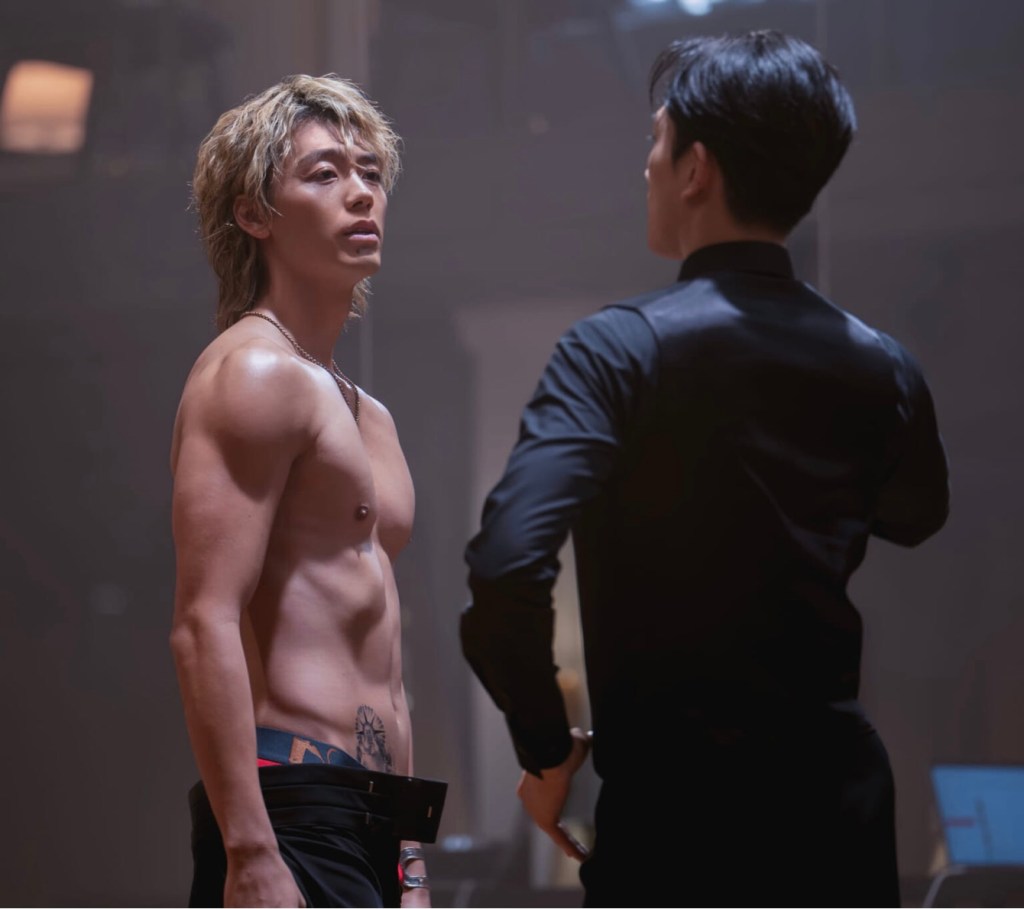
    Screenshot

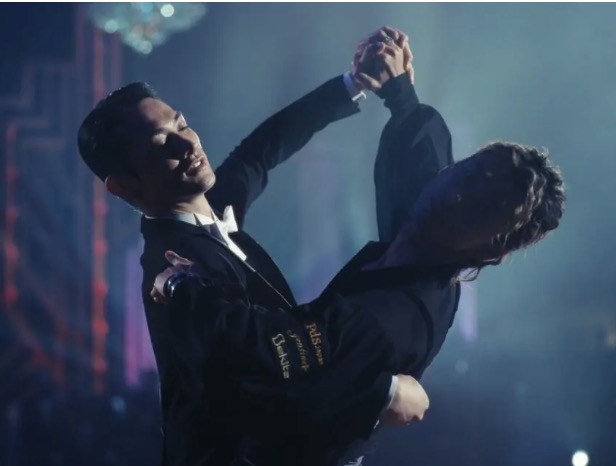
    Fire and ice: Ryuma Takeuchi and Keito Machida in 10 Dance

    In a fantasy finale, the two men briefly become one on the dance floor. At a new international dance competition in Japan, Sugiki and his partner are asked to do a demonstration of the ten dances. Sugiki appears without his female partner and asks Suzuki to take the female role in the demonstration. The two men show their mastery of the ten dances in front of a cheering audience. At the end, they kiss but walk off separately.

    10 Dance would be better as a series than as a two-hour feature film. Important scenes seem to be missing. However, the relationship between the two men is fascinating and Ryuma Takeuchi and Keito Machida brilliantly outline the complex relationship between these two men. You can almost feel the sexual heat coming off of Takeuchi, who is always a magnetic performer. It is amazing that these two actors without previous dance training turn into a male-male Fred and Ginger team. The dance finale is amazing. 
  • HEATED RIVALRY AND THE ACCEPTABLE HOMOSEXUAL

    February 8th, 2026

    I am amazed by how many conversations center on Heated Rivalry. Recently we had a meeting with our financial advisor, a straight guy we have known for decades, a devoted dad and grandfather. He and his wife, a physician, love Heated Rivalry and plan to watch season one again shortly before season two arrives a year or so from now. Recently I got into a long conversation with a gay friend who, like me, writes on gay theatre and musical theatre. Of course, Heated Rivalry came up. My friend was somewhat disturbed about the success of the show and what it said about what American and Canadian societies deem acceptable homosexuality. I don’t find this as bothersome as he does, but, as someone who has written books on gay representation on stage and screen, I felt the need to explore the subject.

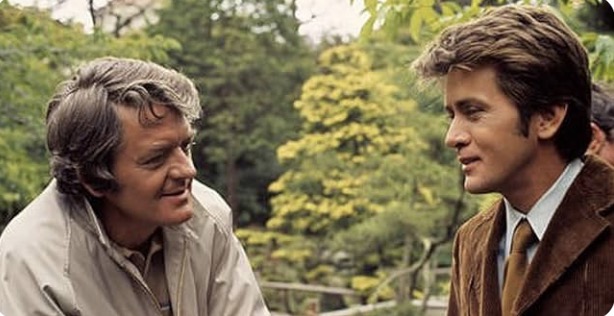
    Back in 1972, ABC presented a made-for-television movie, That Certain Summer, the first serious presentation of a homosexual couple on network television. When the network accepted Richard Levinson’s and William Link’s script, they insisted that there would be no physical contact between the gay couple—no kisses, hugs or even lingering eye contact—a far cry from the simulated sex of Heated Rivalry. The network also worried that the script was too “pro-gay” and demanded that the lead character say, “If I had a choice, it isn’t something I’d pick for myself.” Some gay activists were angry at the line. I thought that at a time in which gay men were vilified, few of us would wish for a life of secrecy and fear of exposure.

    Screenshot

    No touching!: Hal Holbrook and Martin Sheen in the first gay-positive tv drama

    Hal Holbrook and Martin Sheen played the couple. Holbrook was already known as Mark Twain, and Sheen was at the beginning of his television career after some stage success. 

    Of course, the first television drama focusing on a gay couple takes place in San Francisco, the city that was a symbol of decadent urban life—sex, drugs and rock and roll. Folks in the heartland needn’t worry: gay men in television dramas live in big cities. They are also coupled just like heterosexuals. Doug is a building contractor, a solid masculine profession. The creators of That Certain Summer wanted to create an “acceptable” picture of gay men. They also wanted to show how difficult it was for gay men at the time to lead happy lives. There was always the fear of rejection and the pent-up anger that comes from condescension disguised as acceptance. In one of the most cogent moments, Doug’s partner Gary, is staying with his sister and brother-in-law while Doug’s fourteen-year-old son is visiting. When Gary’s oafish brother-in-law declares that Doug would be welcome in his home in a way that suggests that he is granting a big favor, Gary responds, “Look Phil, it’s nice of you to be broad-minded about me,” he says. “I appreciate your tolerance, really I do, but you’ll have to forgive me if I detect a whiff of patronization coming down with it… I’ve been getting it all my life, if it’s not from the militant straights, it’s well-intentioned liberals and their well-intentioned curiosity. Usually I can handle it, but today, I’m just a little touchy.” Gary’s response struck a chord with many of us at the time. Liberals expected gratitude for their “generosity.” Anti-gay conservatives expected respect for their prejudice. Honesty often invited rejection from family members.

    So, over half a century later, Heated Rivalry offers us a group of gay men who are frightened to come out of the closet. They love and work in a culture that has no place for gay men. At the end of episode five, Scott Walker, captain of the championship team, the New York Metros invites his heretofore secret love onto the ice and kisses him in from of thousands of fans and millions watching on television. This event leads Ilya to call his secret lover Shane to tell him that he will be visiting Shane’s cottage at summer. We never find out how Scott’s team reacts to his spectacular coming out. Does he keep his lucrative product endorsements? 

    Screenshot

    Loving gay hunks on Heated Rivalry

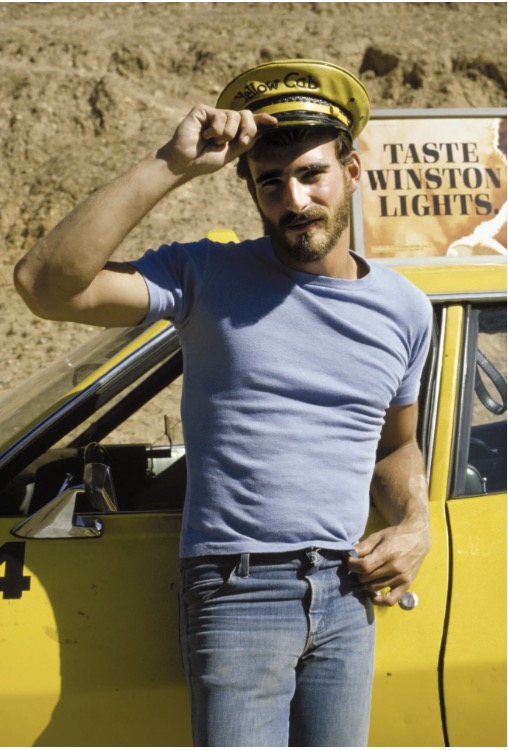
    The closet is still a powerful force on Heated Rivalry. Hockey is a hyper-masculine sport, and homosexuality is seen as an affront against masculinity. This raises another question. Would Heated Rivalry be such an immense success if Shane and Ilya weren’t stars of a macho sport? Are they acceptable to millions of viewers because they are “straight-looking and acting”? I remember half a century ago when there was a big controversy about that fact that a lot of gay men who took out personal ads in gay newspapers (that was a big thing in the days before the internet) insisted that their partners be “straight-looking and acting.” The look in the pre-AIDS 1970s—what was called “the Clone look”—was t-shirt over a muscled body, tight Levis, and a mustache. The gym was called “gay church” because muscles were in. No skinny sissies, please! This was a reaction against the effeminate gay stereotype Hollywood offered for decades. Gay men could be real men. 

    Screenshot

    The 1970s gay clone look. “Straight looking and acting”

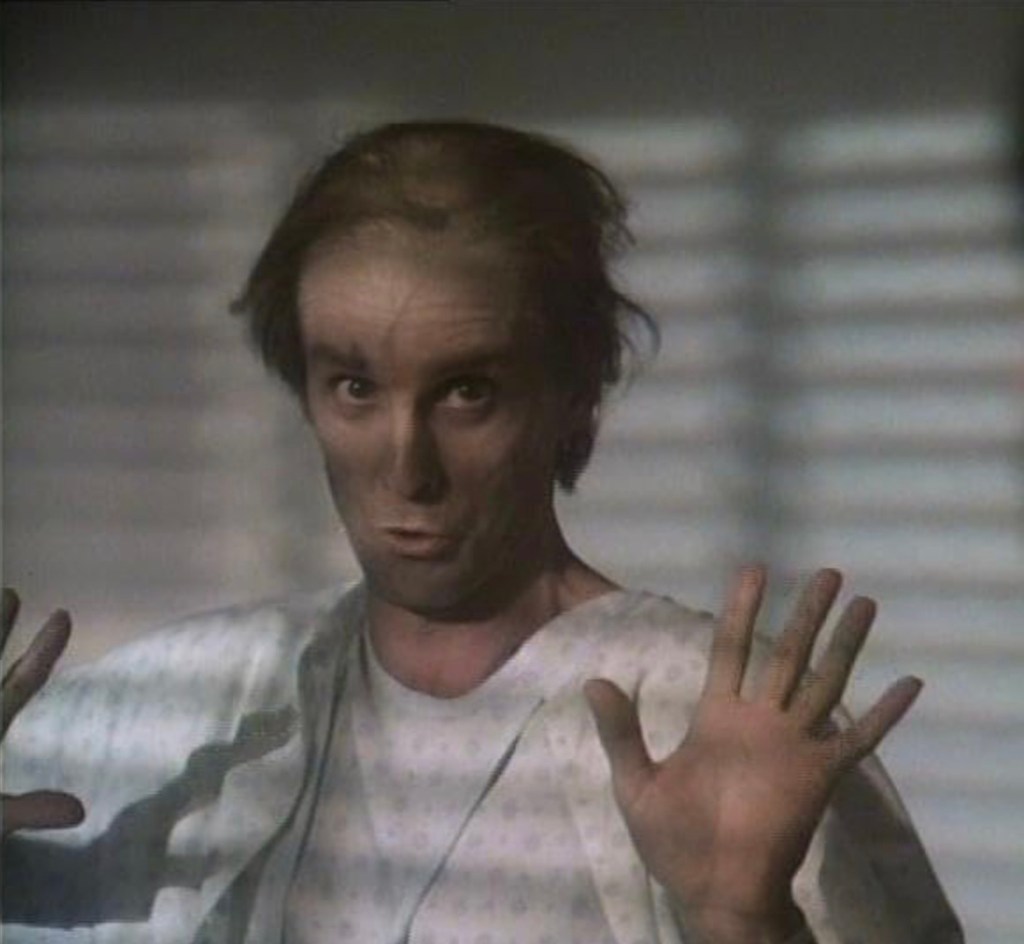
    What about guys who preferred opera to leather, irony rather than pumping iron? Was there a place in gay culture for us? In An Early Frost, the best of the many television AIDS dramas in the 1980s, Michael, a successful young lawyer who lives in Chicago with his partner, contracts AIDS, which sends him home to middle-America and his disapproving, macho father. Worse, a stay in the hospital puts him in contact with a real nelly queen, and a non-upper-middle-class one at that, Victor, a former chef. At first, Michael is repelled by Victor, who not only bears the signs of Kaposi’s sarcoma, but also exhibits the signs of classic Hollywood homosexuality: effeminacy; self-protective wit, campiness, and a fondness for old Susan Hayward movies. Coming to accept—even like—Victor is coming to accept his disease and his own difference. Victor is anything but “straight-looking and acting.” Neither is Michael’s partner Peter, who runs a boutique filled with camp artifacts. 

    Screenshot

    John Glover as Victor in An Early Frost. 

    Everyone in Heated Rivalry is straight looking and acting except, perhaps, Miles, the gay friend of Rose, the film star Shane briefly dates in an unsuccessful effort to be publicly heterosexual. Miles is also a Black man in a show that is almost totally white. Being openly gay in Heated Rivalry places one in a more diverse racial environment. Kip, Scott Walker’s openly gay lover, socializes almost totally with people of color.  

    “Straight-looking and acting” is still the norm. In Trumpland, gay men can be powerful if they are ultra-rich and super-macho, like our feisty Secretary of the Treasury. Heated Rivalry is a giant success in part because it’s about athletes. It’s even OK to prefer, as Shane does, what used to be called the submissive role in gay sex. Even the barista – part-time graduate student in art history Scott Walker is dating is musclebound. 

    I love Heated Rivalry, but I look back with delight and my time with non-straight-looking and acting gay men who were passionate about movies and music and art and were often devilishly funny. I remember irony.

    Screenshot

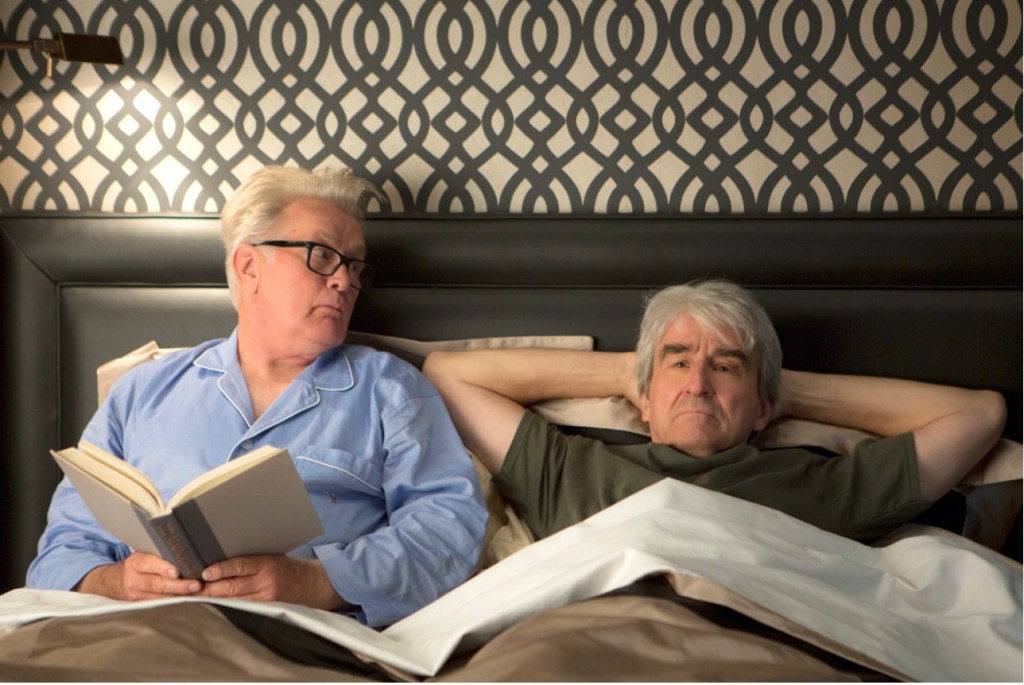
    Martin Sheen and Sam Waterson as a gay couple on Grace and Frankie

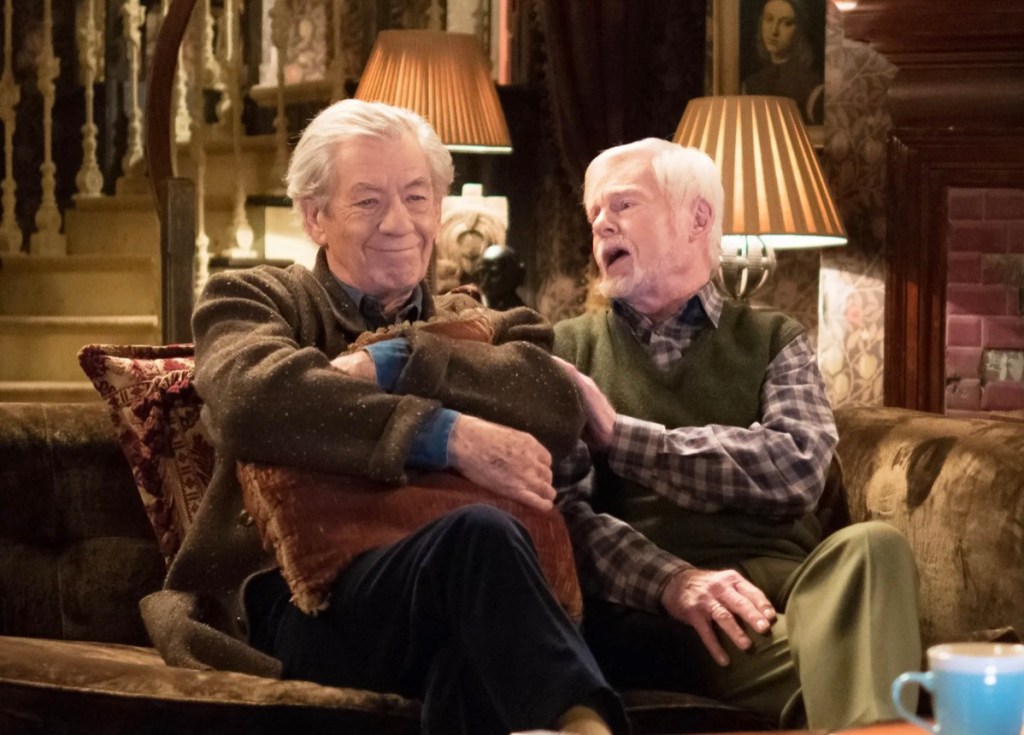
    A much older Martin Sheen played half of a gay couple (the partner was played by Sam Waterston) on the hilarious Netflix series Grace and Frankie. Sheen and Waterston played an old-fashioned gay couple who loved domesticity and amateur theatricals. Such non-macho gay men are relegated to comedy. Perhaps the best television depiction of Grand Old Queens was Ian McKellan and Derek Jacobi in the British series Vicious. I knew real-life versions of those two during my years in London. I never aspired to be like Shane or Ilya on Heated Rivalry. I would fit better in Freddie and Stuart’s living room on Vicious.

    Screenshot

    More my type: Ian McKellan and Derek Jacobi on Vicious

  • EUREKA DAY: A Funny Play for Our Sad Times

    February 6th, 2026
    Screenshot

    Live controversy and online fury in EUREKA DAY

    Here in Chicago, we sometimes get important plays before New York (recently Brandon Jacobs-Jenkins brilliant Purpose and Samuel D. Hunter’s bittersweet  Little Bear Ridge Road at Steppenwolf), but we often have to wait for local theatre companies to offer the best of what has made it to New York, usually from regional theatres elsewhere. Last season, the Goodman presented Jordan Harrison’s The Antiquities, a brilliant picture of where AI may lead us (extinction), and how we got to that point. Now Timeline Theatre and Broadway in Chicago are co-producing Jonathan Spector’s incisive and hilarious Eureka Day at the underused Broadway Playhouse, an excellent mid-sized venue for theatre in the heart of the city.

    Eureka Day began life in 2018 in the Bay Area where it is set, moved to Off-Broadway, and won a Tony Award as Best Revival after its Broadway production in 2024. It was first produced and set before COVID, but the epidemic and the ascendance of an anti-vaxxer as our country’s health czar have given the play more resonance. The play makes us laugh at our country’s saddest tragedies, the inability to come to an agreement on crucial issues and the fury underlying current controversies. It begins as a satire on wacky liberals but expands to include everyone.

    The setting is the library of Eureka Day school, a private school in an affluent bay area town. Shelves are filled with children’s books, reminding us that much of the behavior we will witness is far from mature. The library is the meeting place for the Executive Council of Eureka Day. At the first meeting we witness, the committee is trying to decide whether to add “transracial adoptee” to the long list of categories of inclusion the school publishes. If everyone should be heard and respected, shouldn’t every possible category be included? This silly but benign discussion gives us in the audience a chance to become acquainted with the characters. Don, the school principal, wants to keep everyone happy (an impossible task) and keep the school afloat financially. He feels the needed to read excerpts from Rumi at every meeting to establish his “with it” credentials. The only other male is Eli, who made a fortune in Silicon Valley and now is a stay-at-home dad. Eli is an expert at mansplaining and silencing the women in the room when he has an idea. Eli claims to be in an open marriage (his unseen wife Rebecca seems to disagree) and is conducting an affair with Meiko, a single mom. Meiko knits furiously as she gets more and more confused and upset by the discussions. Suzanne, the council president, is increasingly tyrannical while constantly voicing the need for everyone to respect others’ opinions. Carina, the newcomer to the committee, a Black lesbian, parries the racist assumptions of these proud liberals. 

    Discussions get heated when an outbreak of mumps affects the school. The local government requires vaccination for students who have not built up immunity to the disease through exposure. Suzanne is an anti-vaxxer and bristles at any attempt to require immunization. The committee decides to sponsor a town hall to discuss the school’s policy toward vaccination. When the quarantine shuts the school, the town hall moves online. In a hilarious scene, the online conversation turns quickly into vituperation. All the platitudes about respect and inclusion are given the lie as parents go at each other in a volley of online insults. 

    The guiding principle for the Executive Committee is consensus, not majority rule, but how can a group reach consensus if no one is willing to compromise? Nothing can change because Suzanne will never go along with the majority. For her, respect means accepting her point of view. However, Suzanne has failed to realize that money speaks even more authoritatively than she. Eli, whose son has become seriously ill through exposure to the mumps (probably from Eli’s girlfriend’s daughter), will write a large check to the school if vaccinations are required. Suzanne still insists on having her way until a copy of the Bylaws saves the day. 

    The resolution of Eureka Day offers a complex message. Suzanne is a tyrant, but if one claims that all points of view are valid, a dubious proposition, then she has been unfairly silenced. When the Council meets at the beginning of the next school year, Suzanne isn’t there. I would guess that most of the members of the audience for this play are on the side of vaccination, but we live in a country in which the health system is run by an anti-vaxxer. We now live in a country run by a man who delights in stirring up hate and the kind of online vituperation we see in Eureka Day. We in the audience howl with laughter at the online cruelty of the Eureka Day School parents, but this kind of hatred is eating away at our social fabric.

    Majority rule is necessary because consensus on issues is often impossible, particularly in our culture. Even majority rule depends on our willingness to accept the validity of the vote. Our current administration is constantly sowing doubt about the democratic process. It is ironic that in Eureka Day a promise of money from a Silicon Valley billionaire changes the way the Executive Council operates. We old time liberals in the audience may applaud the outcome, but we see now that tech billionaires are not always the best people to put in positions of power over anything but their own businesses. 

    Eureka Day is funny, but the aftertaste is bitter. Kudos to TimeLine Theatre for such an excellent production of a play that offers laughter and deep thought about where we are now as a nation.

  • MUSICALS–SORT OF

    January 20th, 2026

    It has been an odd year for movie musicals. Wicked: For Good earned half a billion dollars but received much less enthusiastic reviews than last years’ Wicked did. The film version of the Kander and Ebb musical Kiss of the Spider Woman earned only two million dollars at the box office despite enthusiasm for Jennifer Lopez’s performance. The real interest and excitement have been around musical films that defy conventional genre categories.

    Screenshot

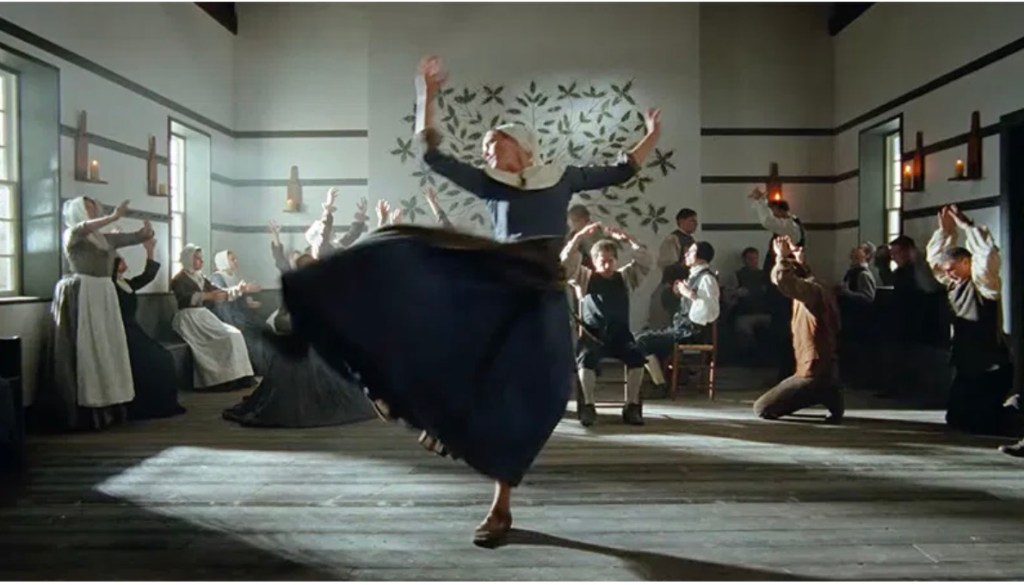
    Music and Religious Ecstasy in The Testament of Ann Lee

    The most artistically successful of these is Mona Fastvold’s The Testament of Ann Lee, a visually stunning biography of the spiritual leader of the 18th century Shaker religious movement. The film begins with Ann Lee’s childhood in Manchester, England. A poor girl who is sent out to work at an early age, Ann has religious visions but finds no meaning in the rituals of the patriarchal established church. As a young woman, she joins a group of Quakers who meet at an aristocratic home. Quaking turns into shaking as the group experiences religious ecstasy through song and dance. There Ann meets her husband, Matthew, a blacksmith. After years of succumbing without pleasure to Matthew’s erotic (for him) whippings and the loss of four children, Ann has a vision that people can only reach God through giving up Adam’s sin—fornication. Given the sexual humiliation she receives from her husband and the agony of four childbirths and the loss of those children—all graphically depicted in the film—release from sex is liberation for a woman of her class. Her younger brother William gives up his boyfriend to become her chief disciple. After being arrested in England, Ann and her followers decide to move to the United States. They establish a community in upstate New York which grows thanks to Williams’s and Ann’s preaching at nearby communities. Ann’s sexually frustrated husband leaves her, as does a young couple who want a complete life together. The Shakers endure a brutal attack from men who believe them to be witches and demons. Wiliam dies shortly after the attack; Ann, who was beaten and sexually assaulted, dies a year later. Fastvold’s screenplay, written with her life partner Brady Corbet (The Brutalist), uses voiceover narration and chapter headings to bridge the scenes that take place over decades.

    So, The Testament of Ann Lee is the biography of a charismatic religious figure at the time of the founding of our nation. Ann Lee believed that women were the guides to salvation and that the second coming would be a woman. Like the Mormons a few decades later, her group faced violent opposition. Unlike the Mormons, it does not flourish, primarily because of the ban on sex. We see all kinds of hardship and cruelty imposed on the bodies of Ann and William, but we also see the spiritual ecstasy of song and dance for them and their followers. 

    The Testament of Ann Lee is unique in its use of musical numbers in a serious story, but there is no other way to show the ecstasy that was central to the Shakers’ worship. English composer Daniel Blumberg has taken old Shaker hymns and turned them into rapturous songs. Celia Rowlson-Hall’s choreography has been beautifully photographed, often with overhead shots that echo Busby Berkeley’s 1930s musical numbers. What I found fascinating is the ritualized orderliness of much of the dancing.

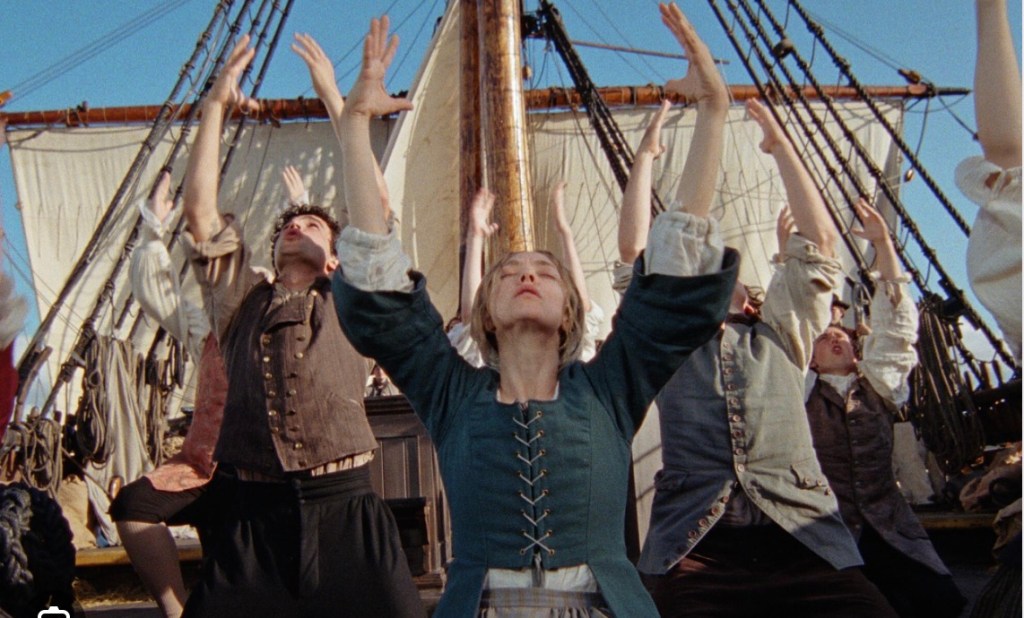
    One of the film’s most powerful sequences takes place during the four-week sea voyage to the New World. The ship’s crew is at first hostile to the Shakers’ loud singing and dancing on the deck. After Ann’s heroic marshalling of her group during a storm that threatens to sink the ship, the crew comes to accept the strange, noisy religious practices of Ann and her followers.

    Screenshot

    Shipboard worship in The Testament of Ann Lee

    Fastvold effectively alternates long shots with close ups that look like old portraits. Amanda Seyfried meets the challenge of playing this charismatic religious leader. Ann had the force of personality to convince her followers that a woman could be a religious leader. She also had the power to convince them to give up sex and to cross the Atlantic to an unknown land. Seyfried manages to convey both spiritual power and vulnerability. My vote for Best Actress Oscar has switched from Jessie Buckley to Seyfried. I hope that the Academy has the sense to nominate her.

    Filmed in Hungary and Sweden, as well as in New England, The Testament of Ann Lee looks convincingly like it takes place in the eighteenth century. The film is a totally absorbing hybrid that gives us a sense of the rapture that the Shakers experienced in violent, challenging times. 

    Screenshot

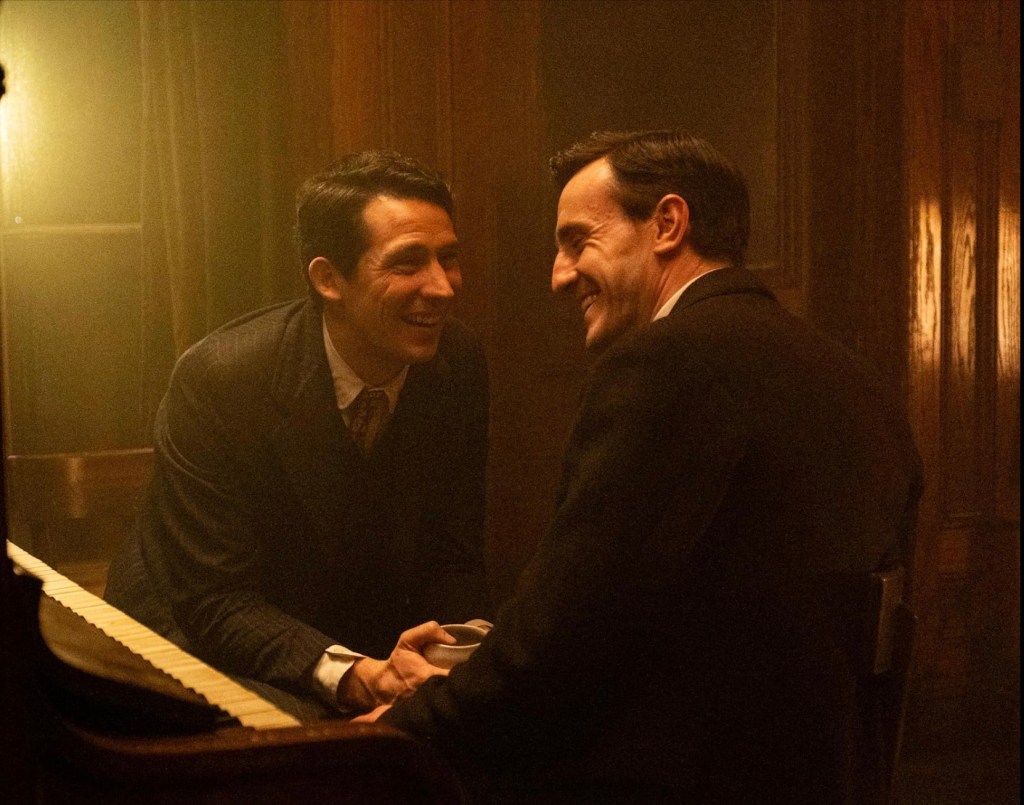
    David and Lionel fall in love in The History of Sound

    The History of Sound is another hybrid: part love story, part musical. In 1917, Lionel (Paul Mescal), who has been raised on a poor Kentucky farm, is given a scholarship to the New England Conservatory of Music. At a local bar, Lionel meets a fellow student, David (Josh O’Connor). Before the night is out, Lionel is in David’s bed, but their romance is short-lived. David is sent off to war. Lionel, whose poor eyesight exempts him from military service, returns to the family farm. A couple of years later, David, now a professor of music at Bowdoin College, sends Josh a letter inviting him to join David on a trip through Maine where they will research folk songs. With the help of a windup wax cylinder recorder, they capture folk songs. The trip allows them to rekindle their relationship, but at the end of the summer, they have to part ways again. Lionel moves on to Europe. He leaves a conducting job and a boyfriend in Italy and moves on to England where he again leaves a good job and a wealthy girlfriend. He is drawn back to the States to find David, who has never answered his letters. At Bowdoin, he discovers that the college knows nothing about David’s research trip and that David, suffering from PTSD, killed himself. He also discovers that David was married when he traveled with Lionel and that he had a child. Eventually Lionel becomes a celebrated ethnomusicologist. 

    The History of Sound is a lovely film, perhaps too muted in its telling of the love of the two men. David is never honest with Lionel about the extent to which the war traumatized him or about his marriage and Lionel doesn’t express much shock at learning of David’s deceptions. In the process of avoiding melodrama, writer Ben Shattuck and director Oliver Hermanus suck some of the blood out of their story

    The History of Sound isn’t Josh O’Connor’s first gay love story. His first major film was Francis Lee’s beautiful God’s Own Country, in which O’Connor plays a deeply unhappy young Yorkshire farmer who falls in love with a Romanian man who comes to help on the farm. God’s Own Country is a classic of gay cinema greatly because of O’Connor’s performance. In The History of Sound, O’Connor’s David never fully admits to Lionel his pain or his marital situation. What is he looking for in his trip to Maine with Lionel? Escape from his demons? A return to a youthful romance that brought him happiness? O’Connor is brilliant at showing a character battling against emotional pain. That’s even evident in his superb performance in the Knives Out film, Wake Up Dead Man. Paul Mescal has the longer but easier role. As usual, he exudes enormous charm.

    As good as Mescal and O’Connor are, the most radiant scenes in The History of Sound are of country folk singing into that wax cylinder recorder. Even in drab, humble circumstances, the singers radiate joy through the art (artlessness, really) of their singing. It’s the musical moments I remember most vividly.

    Screenshot

    The magical, musical K-Pop demon hunters.

    The Golden Globe for best animated film and for best song went to the Netflix film K-Pop Demon Hunters, which has become the most watched original title in Netflix history, racking up more that 500 million views so far. To appreciate the film, it helps to understand the success of the South Korean phenomenon K-Pop with its crazily costumed and energetic male and female singing and dancing groups. K-Pop is aimed at teenagers, of course, but K-Pop Demon Hunters about a girl singing group who—you guessed it—hunt demons. The demons have created a boy group who are out to corrupt millions of fans with their catchy songs. The film silly but highly entertaining. The wildly colorful animation is mesmerizing and the music is infectious. This is a delicious dessert of a film. 

  • Richard Linklater’s BLUE MOON

    January 14th, 2026
    Screenshot

    Brilliant lyricist Lorenz Hart

    Richard Linklater’s Blue Moon (screenplay by Robert Kaplow), opens with a drunk Lorenz Hart staggering down an alley on a rainy night and collapsing. A voiceover then gives us the death announcement that went out on the New York Times radio station, WQXR, on November 22, 1943. The film then flashes back to March 31, 1943, the opening night of Rodgers and Hammerstein’s triumphant first collaboration, Oklahoma. Hart, bored and disgusted by what he sees as cornball hokum, leaves the theatre and goes down the block to Sardi’s bar.

    Most biopics of classic composers or lyricists have given a much-doctored version of the artist’s life, often with lavish musical numbers. Blue Moon offers a fictionalized version of one sad night in the life of the celebrated lyricist. The only music is played by a barroom pianist.

    If you don’t know, Lorenz Hart was Richard Rodger’s only collaborator for the first twenty years of his career. Rodgers and Hart were the most successful Broadway composers of their day, but Hart, an alcoholic, became increasingly unreliable, a thorn in the side of the very disciplined, chilly, Richard Rodgers (ironically, Rodgers later became an alcoholic). By the early 1940s, Rodgers realized that he had to find a new collaborator. He chose Oscar Hammerstein, II, another Columbia graduate who had been writing lyrics for twenty years but never had a hit show except for the 1927 classic Show Boat. Rodgers and Hammerstein became legendary both as artists and as businessmen who produced their own shows as well as hits like Annie Get Your Gun. Despite their success, Hammerstein never knew whether Rodgers liked him as a person. 

    In our piano bench in my childhood home was a thick volume of Rodgers and Hart songs. Each song is a classic in its own right: “Falling in Love with Love,” “Where or When,” “My Funny Valentine.” Hart’s lyrics are witty at a time when wit was prized by Broadway audiences. They are also melancholy, the utterances of a short (under five feet tall), homely, lonely homosexual. Drinking was a way of dealing with his self-loathing. Of course, this little, balding guy was attracted to tall blond men. Sex was often a cash transaction arranged with the help of Hart’s friend and procurer, Doc Bender.

    I have written at length before on how Hart’s lyrics express his own experience as a homely man who has never experienced love (See my book, Something for the Boys: Musical Theater and Gay Culture). 

    The Lorenz Hart we see in Blue Moon is suffering unrequited love for a tall blond, but it’s a tall blond female Yale undergraduate who sees the older lyricist as someone she can confide in, but not a romantic partner. For the most part, their conversations involve him listening intently as she describes in detail her sexual experiences with men who aren’t interested in her. They sound like the exchanges of romantic and sexual horror stories many gay men have with their straight female best friends. In Blue Moon, Hart has no sexual confidences to share, and he is in love with the female Yale undergrad. This isn’t the first time Hollywood has made a gay songwriter heterosexual. Check out the Hollywood biopic about Cole Porter, Night and Day in which Cary Grant’s Cole only has eyes for his wife. Hart claims to love Elizabeth and wants to marry her (she’s twenty-eight years younger than he is), but what he really wants is a bond of friendship, “Maybe after a lifetime of colliding with strangers I have finally found a friend.” Perhaps this version of Lorenz Hart is bisexual. He confesses, “Larry Hart is drunk with beauty wherever he finds it.” 

    Hart talks pretty much nonstop from the moment he enters Sardi’s bar. He gets in a long conversation with writer E.B. White during which he gives White the idea for his children’s book, Stuart Little. Later he corners Richard Rodgers (Andrew Scott—odd casting) and tries to sell him on a musical about Marco Polo. Rodgers offers him work on a revival of their musical, A Connecticut Yankee in King Arthur’s Court, but will not deal any more with Hart’s benders and disappearances: “It’s a business, you know.” Oscar Hammerstein brings over his protégé, a young, precocious Stephen Sondheim who proceeds to utter the negative comments on Hart’s lyrics that Sondheim decades later wrote in his book, Finishing the Hat. Throughout the film, Hart knows deep down that his career is over. He says of a bottle on the bar, “The whiskey that made Lorenz Hart unemployable.” At the beginning of the film, he swears that he will control his drinking, but the success of Oklahoma! makes that resolution impossible to keep.

    The writing is all very literate and often witty, but the reason to see the film is Ethan Hawke’s performance. Through some deft scene design and trick camera work, Hawke looks shorter than anyone else on the screen. The makeup is very convincing. More important, Hawke, turns Hart into a desperate man who knows how to charm. It is fun to be in his company, yet he knows he is doomed. Hawke is surrounded by an excellent supporting cast. Bobby Cannavale is charming as the kind bartender. Patrick Kennedy manages to look like E.B. White. Margaret Qualley is charming as the callow Yale undergrad. Hawke’s version of Hart managed to drink a lot of liquor and not seem drunk. Impressive!

    As I watched Blue Moon, I kept asking myself who is the audience for this film? Who, apart from aficionados of golden age Broadway, cares about Lorenz Hart? Why avoid his homosexuality, a key aspect of his personality? One of Hart’s sexual partners remembered, “You’d wake up and find him in the closet. He’d get up out of bed and go sleep in the closet. Sex frightened him.” Another partner, Hollywood song and dance man Dan Dailey, said, “He disliked himself before and after sex and his partners during.” Rumor has it that he preferred watching to participating. Perhaps now it is politically incorrect to depict a self-hating homosexual, but the stigmas attached to same-sex love created many self-haters. It’s part of our past. Honesty would be better than turning him straightish.

    By the way, Hart actually stayed until the end of Oklahoma! which he attended with his mother, with whom he lived. They went briefly to Sardis—just long enough for Hart to congratulate Rodgers. His beloved mother died the next month. Yes, it really doesn’t matter that the film strays from the facts. It does matter that it gives us little sense of Hart’s brilliance as a lyricist. That’s what is important about him.

    One final question: Why is the piano music under the end titles by Cole Porter and Irving Berlin and not by Hart’s partner, Richard Rodgers? 

    Screenshot

       Ethan Hawke as Lorenz Hart

  • HEATED RIVALRY Deserves the Hype It Is Receiving

    January 9th, 2026
    Screenshot

    Connor Storrie and Hudson Williams in Heated Rivalry

    At a time when many young people prefer TikTok to television, a Canadian series, Heated Rivalry, has become a phenomenon. HBO bought the rights to air the series in the United States shortly before its premiere on the Canadian subscription network Crave. No one expected the show to become a smash hit. The ratings have been record-breaking, and the show and its creator and stars are all over the media. What is odd about all this is that Heated Rivalry is about two hockey players whose relationship changes over eight years from occasional furtive hot sex to love. In an era when our government is not supportive of lgbtq people unless they are billionaire Trump supporters, the success of Heated Rivalry is quite amazing. What it shows is that the homophobic evangelical right wing is woefully out of touch with this aspect of contemporary culture.

    Like the Asian BL series I discussed in my last blog, Heated Rivalry appeals to gay men, of course, though some on the gay left see the show as politically incorrect, but its main appeal is to young straight women. The best-selling books on which the series is based were published by Harlequin for a female audience. The people mobbing appearances by the show’s stars are young women who see in this romance of two sexy but sensitive jocks a version of masculinity that excites them—even though these two guys only have eyes for each other.

    More amazing are the blogs where straight guys who usually talk only about sports devote their shows to enthusiastic play-by-play analyses of episodes of Heated Rivalry. It’s now cool for straight guys to discuss sex scenes involving athletes. Is it cool because the leading characters are athletes? Heated Rivalry vividly dramatizes how difficult it is for a star gay athlete to be open about his personal life. 

    A principal reason for the success of Heated Rivalry is that it is an excellent show, notches above the writing, direction and acting of most television. In his book Aspects of the Novel, the great British novelist E.M. Forster discussed round and flat characters. Television is filled with flat characters who don’t change from episode to episode. The characters in Heated Rivalry deepen and grow throughout the series. We the viewers always know that there is more they are not showing each other and us. It is the unspoken moments (and I don’t mean the sex) that are often the most powerful, as well as the moments when a character says the opposite of what he or she feels. There’s a scene in episode three when Kip, a young barista who has fallen in love with the captain of the New York hockey team, tells his female best friend, “I’ve never been so happy.” The look on his face tells us and her the opposite. 

    If you don’t know already, Heated Rivalry is the story of two hockey players who ascend from being prize rookies to star captains of opposing teams. Half Asian Shane Hollander (Hudson Williams) plays for Montreal; Russian Ilya Rozanov (Connor Storrie) plays for Boston. The hockey world sees them as rivals who hate each other. From their first meeting as teenagers, they are attracted to each other but know that anything more than occasional hot sex is impossible for them. Over eight years, they deal separately and together with the conflicts their feelings cause them. Ilya, who enjoys sex with women but comes to love Shane, knows that exposure would be disastrous in Putin’s Russia where his father and brother are police officers. Shane has great difficulty accepting his homosexuality. His crises are more internal and more painful as he finds it difficult to express his feelings. These guys only become happy together in the deeply moving final episode when they are in Shane’s beautiful lakeside retreat. For the first time they, cautiously at first, express their feelings for each other.

    Hudson Williams and Connor Storrie were unknowns before Heated Rivalry exploded onto the scene. All I can say is that it is impossible to imagine the show with any other actors. They both are brilliant at showing unspoken anguish and confusion. There’s a moment in the season finale when the two men finally say “I love you” to each other. Shane then says to Ilya, “Is it killing you too?” to which Ilya responds, “Not anymore.” The difficulty they both have felt getting to this point of emotional release has been heartbreaking for them and for us viewers. The chemistry between them is palpable.

    I could go on about how Heated Rivalry is a Canadian version of the BL series I wrote about last time. It follows many of the conventions of BL. It is also better written than any BL series I have seen (I need subtitles for the Asian series so can’t really judge the quality of the dialogue.), less dependent on melodramatic peripeteia and more reliant on nuances of character. Like BL series, it is deeply romantic, based on the possibility of “till death do us part” love in an age in which divorce is easy and many young people have given up believing in the ideal of marriage. 

    Where Heated Rivalry differs from the relatively chaste Asian series is in the many hot sex scenes between the male leads. There are lots of rear ends but no genitalia. Television is still squeamish about showing men’s privates. The sex always expresses the dynamics of an evolving relationship. These guys like sex, but they also stop to ask permission. “Can I fuck you?” is repeated a lot. There is always respect and consent. The millions of female fans must appreciate that as much as they must like watching good-looking men enjoying sex with each other. Of course, the men are all magnificently built. Even the young art historian who supports himself as a barista looks like he spends all day in the gym. I know a lot of art historians and none of them is built like this guy!

    The show has enormous emotional range from humor to complex intimate moments to scenes of emotional exhilaration like the end of episode five when the veteran closeted New York team captain after winning the championship comes out publicly by pulling the man he loves onto the ice and kissing him in front of thousands of fans and the television cameras. Wolf Parade’s song “I Believe in Anything” is blaring as the camera swirls around the lovers. It is one of the most emotionally thrilling scenes in the history of television. It has an enormous effect on Shane and Ilya, who are watching.

    Screenshot

    Scott and Kip’s very public kiss.

    Asian BL series and this gigantically successful Canadian series are popular with women because they want to love men like Shane and Ilya—successful, physical men who can express their feelings and who can cry. It’s always women that these men can confide in. Soft masculinity is out of favor with the powers that be in Russia, China and the United States. It isn’t out of favor with the ardent followers of Heated Rivalry.

  • BOY LOVE

    January 7th, 2026

    We enjoy so many Asian series on Netflix that our homepage is filled with Asian shows. I first got hooked on Korean shows like Crash Landing on You about a spoiled rich South Korean woman who, thanks to a sudden windstorm, finds herself in North Korea somewhat like Dorothy found herself in Oz. This version of North Korea is relatively benign compared to the grim reality of that dictatorship. Of course, she is discovered by a handsome North Korean soldier who hides her. Their bickering-to-love trajectory is straight out of traditional romcoms. Later I got hooked on Korean mysteries, Japanese series about socially inept chefs (food plays a major role in Japanese series), and Japanese medical shows, particularly the charming Dr. Coto’s Clinic and After School Doctor. Then I happened upon a series called Love Is a Poison which sent me down the rabbit hole of BL (Boy Love).

    The Japanese series LOVE IS A POISON is one of the rare Asian BL series available on Netflix. The series centers on Ryoma Shiba, an uptight thirtyish lawyer whose only interest is career advancement. He’s already on the way to becoming Senior Partner in his prestigious law firm. His world is shaken when a mysterious young man, Haruto, keeps showing up. By the end of the first episode, Haruto has managed to move into Shiba’s apartment and, with his skills as a con man, obtains information that helps Shiba win his cases.

    Much of the humor in the series is built on the contrast between Shiba’s uptightness and Haruto’s lack of inhibition. In one episode, Haruto convinces Shiba to go with him to a spa for a “hot and spicy weekend.” The sexually inexperienced Shiba is terrified.

    When Shiba and Haruto become a loving couple, the show settles into a domestic pattern that must be common in Japanese culture. Shiba, the primary breadwinner, comes home to Haruto’s beautifully cooked dinners. Gay couples are legible to Japanese audiences if one man takes the woman’s role.

    In the charming series, What Did You Eat Yesterday (not yet available in the US), Shiro, a lawyer, comes home every day to cook a sumptuous meal for his partner Kenji, a hairdresser. The food seems to be the most important bond. When after years together, Shiro brings Kenji to meet his parents, the older couple are obsessed with finding out who is the man and who is the woman in the relationship.

    The first season of Love Is a Poison follows the formula of romantic comedy. Shiba and Haruto bicker with each other but are obviously smitten. Boy meets boy, boy loses boy, but the couple declare their love in the last episode. Season two take a more melodramatic turn after Haruto’s evil father enters the scene. Still, the most entertaining moments are the most romantic ones.

    There is excellent chemistry between Shogo Hama and Katsumi Hyado, the actors playing Shiba and Haruto. They play comedy well together and are convincing as two men strongly attracted to each other. While there is no political discussion of gay marriage (illegal in Japan), the couple wear wedding rings and clearly see themselves as married. The sex is very carefully presented. We are supposed to believe that these men are in love and share a bed, but don’t have sex for months. 

    When I watched Love Is a Poison, I thought, “Hmm, a Japanese gay series. Interesting.” Then I discovered that Love Is a Poison is one of hundreds of examples of BL (Boy Love), that are produced all over Asia. A friend suggested that I subscribe to Viki, a series that specializes in Asian romantic films and series including BL. From there I found GaGaOOLala, a similar site. The conventions these series fascinated me. To some extent, they are adaptations of the conventions of heterosexual romcoms: two people who initially don’t get along fall in love, face a crisis in their relationship and are reunited. As I delved further into these series, I discovered that Boy Love series (what they are called in Asia) are extremely popular and that their target audience is young heterosexual women. And gay men, of course.

    Boy Love began early in this century as a popular manga genre in Japan. It was inevitable that the television and film industry would take advantage of the popularity of the genre. The genre quickly spread to Taiwan, Thailand, South Korea, and, surprisingly, mainland China, which produces some of the best series. Sometimes a popular Japanese series will be adapted for one or more of the other countries.

    A lot of scholarly work has been produced on why Boy Love stories are so popular with Asian women. Somehow watching good-looking, sensitive (sometimes downright weepy) men in romantic relationships appeals to young Asian women as much, if not more, than heterosexual romances. Early in my career, I was interested in how gay men could read themselves into heterosexual romance. I would have to be more of an expert in Asian culture to understand how straight women enjoy reading themselves into gay romance. 

    What do these series offer Western gay men? Well, if you, like me, find Asian men attractive, there is much male pulchritude and, if you like romantic comedies and dramas, they offer the kind of somewhat innocent romance that used to the stock in trade of 1950s Hollywood films. The sex is usually confined to kissing and some shirtless embracing. I have only encountered one series that went beyond that. 

    The plot lines in these series are very similar and fall into specific genres. I couldn’t get interested in the many schoolboy romances that are available. We now have European versions of these in the highly successful Netflix series Young Royals (Sweden) and Heartstoppers (UK), and a glossy, high-budget American version with Prime’s Red, White and Royal Blue. I’ll deal with the wildly successful Canadian series Heated Rivalry in a separate blog.

    From watching a few of the many office romance BL series, I can see that BL series and films have quite rigid formulae. While both leads are very good-looking, one of the two leading characters seems more androgynous than the other; usually more boyish looking and more emotional. The other is likely to be a bit older, taller, more emotionally mature, and in a superior position to his partner (his boss or the more popular, more athletic kid at school). One tends to be gregarious, the other more of a loner. One tends to be secure; the other less so. One tends to be more aggressive. One tends to be from a wealthy background; the other poor or middle-class. What is odd in the series with men in their twenties or thirties is that at least one of the couple is often sexually inexperienced. Often one has never thought about his sexual orientation before. Talking about their feelings is a crucial part of the relationships. These are sensitive men often negotiating their first love.

    I couldn’t help but notice echoes of Jane Austen’s Pride and Prejudice in many BL series. A sensitive young man finds himself drawn to a taciturn, slightly older man. The older man has great difficulty expressing his feelings. As a result, he seems cold. The younger man understandably has difficult reading the signals the other man is trying to send.

    A number of the adult series are workplace romances. The most successful is the Japanese comic series Ossan’s Love (Viki), about Haruta, a thirty-three year old real estate salesman who discovers that both his middle-aged, married boss and his co-worker Maki are in love with him. First presented as a one-hour drama in 2016, the characters and situation were so popular that a series was presented in 2018, followed by a feature-film sequel in 2019. Shortly after that, a new series moved the characters out of the real estate office and into an airport. Haruta became a flight attendant avoiding the advances of the pilot. In 2024, a new series was produced with Haruta back in the real estate office. Later a Hong Kong version and a Thai version were produced.

    Screenshot

    Haruta caught between his boyfriend and his doting boss on Ossan’s Love

    There is romance in Ossan’s Love, but much of the success of the series can be attributed to the comic talents of the cast. The show is a combination of romance and slapstick sitcom. Tanaka Kei, who plays Haruta, is a gifted clown, a male Lucille Ball. Haruta may be thirty-three, but Tanaka plays him as if he were a child. Both Yoshida Kotaro, who plays his lovesick boss, and Kento Hayasi, who plays Maki, Haruto’s boyfriend, are also superb comics. Some of the slapstick battles between the jealous Maki and the doting boss are hilarious.

    The viewer has to accept the notion that Haruta is a thirty-three-year-old virgin who has never thought about the possibility of loving another man (or, it seems, a woman). His conversion happens, as is usually the case in Japanese BL dramas, with no discussion of sexual orientation. You also have to get past all you have thought about sexual harassment in the workplace in order to be amused by the boss’s schemes to attract Haruta. Ossan’s Love lives in a fantasy world where nothing needs to be taken seriously.  

    The Korean series, The New Employee is more typical of BL office romances. Fresh from a graduate degree in management, Seung Hyun starts a job as an intern for an advertising agency. He is good-looking and charming, but in his mid-twenties and still a virgin, whose only romantic experience is an unrequited crush at university. His boss, Kim Jong Chan, is a total workaholic with little in the way of social skills. Although he brings in 50% of the agency’s profits, his aloof attitude has made him many enemies at the firm. Kim quickly sees that his young intern has the kind of brilliant new ideas he needs. He also quickly becomes enamored of his cute young assistant. Seung Hyun is friendly with two young women in the office but he only has eyes for his boss.

    Screenshot

    The boss and his intern in The New Employee

    Seung knows he is gay—he even belonged to the lesbian-gay alliance at university—but the romance with his boss is his first real relationship. The innocence of at least one of the lovers is always part of these romances. So is the age difference between boss and his assistant, although the boss doesn’t seem much older.

    Here, as in other series, the new romance is a rekindling of an adolescent romance. First love, even when unrequited, is the only true love. The Japanese series, Tokyo in April Is… is an even more intense version of the story of a reunion of adolescent lovers who were separated. After a forced separation when they were fifteen, and years abroad, Kazuma gets a job at an advertising agency where Ren is the head designer. As is the case in many iterations of the genre, one of the couple has great difficulty expressing his feelings. Older people (corrupt management, harsh parents) keep creating crises for the couple.

    The creepiest of the BL workplace series is the Taiwanese production, You Are Mine. The formula is the same. A cute young man from humble origins becomes secretary to the General Manager (and President’s son) of a large corporation. The secretary is sweet, outgoing, naïve; his boss is demanding, temperamental, moody, withdrawn. He’s also handsome (everyone is good-looking on BL series). When the boss becomes attracted to his cute secretary, he becomes downright unprofessional. The young secretary is justifiably baffled and frightened by his boss’s advances. He knows the boss is attracted to him but thinks his intentions are less than honorable. He also is aware of the class difference and can’t imagine why the boss is so obsessively infatuated with him. When he tries to resign, the boss invokes a non-existent clause in his contract which makes resignation impossible. The boss is totally, obsessively smitten, but handles it in the most awkward way possible. The series makes it impossible for the viewer to have any sympathy for him. This is a BL series, which means that love, even weird obsessive love, wins out in the end.

    Screenshot

    Obsessive love Chinese style in To My Shore

    To My Shore from mainland China, the best written and best acted series I have encountered, takes weird, obsessive love to violent extremes. You Shu Lang, a manager at a pharmaceutical company, accidentally rear ends the fancy car owned by Fan Xiao, an executive at a crooked conglomerate. Both men suffered awful childhood trauma. While You Shu Lang has built up a kind, competent persona, he seems to be emotionally blocked. Fan Xiao has become a ruthless monster who distrusts any sign of goodness. Circumstances bring the two men together a second time in a hospital where You Shu Lan enlists Fan Xiao’s help in saving a baby. Fan Xiao, becomes obsessed with hurting You Shu Lang, first by trying to steal his boyfriend, then by seducing him into a perverse, controlling relationship. While his goal seems to be to destroy You, he finds that he is falling in love with him, which makes him even more obsessive and controlling. The early episodes trace a warped love-hate story that ends in prison for Fan Xiao and the need to start life and career all over again for You. When Fan Xiao gets out of prison, he tries to become a kind of guardian angel for You Shu Lang. Can their destructive love turn into something positive?

    This is Emily Bronte or Patricia Highsmith territory, but the writing, based on a novel, is a cut above most series, and the acting of veteran Hao Yi Ran and debutant Yun Qi is excellent. The emotions here, as in many BL series—are operatic. Actors Hao and Yun balance the heightened emotions with enough of a sense of realism to maintain sufficient credibility. The series has been so successful that at least one more bonus episode is in the works. The stars have become internet celebrities.

    Maybe I, an opera queen of the first order, am drawn to BL series because they are so operatic. The emotions are either repressed or taken to extremes. The acting is somewhat stylized. The stories are about the discovery of powerful desire and the possibility of true love between two men who discover their sensitive side. In the charming Japanese series Old Fashioned Cupcake, a lonely, repressed thirty-nine-year-old executive and his twenty-nine-year-old subordinate see women chatting amiably in a café and decide they will pretend to be women so that they will share confidences and feelings. As men, they cannot do that. Every weekend, they go to a dessert place frequented by women. Eventually, they realize that they have strong feelings for each other. Through role-playing as women, they learn to express those feelings. And, as there has to be in Japanese series, there is the ritual of sharing food together. Maybe what women see in these series are men who can express their emotions more fully than the men in their lives. What we gay men see are love stories between beautiful men and affirmations of male-male love, all with a “forever after” happy ending.

    Screenshot

    Learning emotional freedom from the ladies in Old Fashioned Cupcake

  • On Broadway: STEREOPHONIC and ONCE UPON A MATTRESS

    August 26th, 2024

    In my theatergoing experience, it has usually been the case that a play that is three hours long could benefit from some pruning. I have seen HAMLETs and KING LEARs that ran well over three hours and the time seemed to fly by. Eugene O’Neill’s plays are all much too long for. their content—self-indulgent characters babbling endlessly. Recently in Chicago, Brandon Jacob Jenkins’ PURPOSE ran almost three hours and no one seemed to mind. Even more than an average length play, a long play needs absorbing characters, brilliant dialogue, and a gripping story. 

                      The multi-award winning STEREOPHONIC by David Adjmi clocks in at three and a quarter hours. Does it need to be? The individual characters are not particularly interesting, their dialogue is pretty flat, and much of what happens is familiar from films and television series. Nonetheless, the play somehow works.

                      Based loosely on the history of the 1970s group Fleetwood Mac, much of STEREOPHONIC takes place in a recording studio in Sausalito, California in 1975. Basically, we witness the all-night recording session of the album that will make the group famous. Peter, the alpha male of the group, is a ruthless perfectionist. He and one of the female singers, Diana, are romantically involved. The British members of the group seem less driven than the Americans. Reg, the bass player, is either swigging from a liquor bottle or burying his nose in cocaine. Simon, the drummer, would like to be able to exert a bit more individuality rather than be told exactly what to do. Holly, the keyboard player, wants to find her way through all of the male ego. Out of the studio the band members flirt and fight. Inside they work at being an ensemble.

                      The set allows us to see the personal and artistic side of these characters. Downstage is the control room where the sound engineers sit. The area is also the lounge for the musicians when they are not in the studio, the place where their personal interactions take place. Behind a large glass window is the studio itself where the real work happens.

                      The group is a dysfunctional intentional family. They have been living together in a rented house when they are not in a recording studio. We watch their personal relationships poison their artistic relationship. Peter is a master of the hurtful put down. Strangely, the reaction to his cruelty is usually silence (there are quite a few long pauses. Harold Pinter would have loved it!).  No one wants to risk fighting back. Of course he becomes increasingly isolated. Is he an uncompromising perfectionist or just a nasty S.O.B? Diana, his partner of nine years, leaves him and leaves the group to embark on a solo career.

                      There are two themes that are developed in STEREOPHONIC. The first is the hard work involved in creating even a pop album. We’ve seen that story before, but it is presented here more realistically than we may be used to seeing. The other, more fascinating dimension of the work is the difficulty of being an ensemble. We all know the story of the Beatles and many of us know the trials and tribulations of Fleetwood Mac. Here we watch the creation and breakdown of an ensemble. 

    In the first half, the group records together, much like a live performance. As, later, individuals are recorded on separate tracks that are mixed together, the individuals in the group resist Peter’s increasingly tyrannical direction. Members decide to go their own way. 

    The final scene shows us the group’s last performing session. They now are stars and are recording in Los Angeles, but most of the members want to move on. At the end, the most important creative figure is Grover, the recording engineer, who seems to have no life outside the studio. Grover has developed from a novice engineer to “producer,” the person who takes the bits and pieces and creates the album. 

    Under Daniel Aukin’s direction, the ensemble cast is brilliant. The play demands good old-fashioned realistic acting, and the seven actors truly inhabit their characters. They are also fine musicians. Composer Will Butler gets billing equal to the playwright’s, but don’t go expecting a musical. Only a few of songs are performed in full. 

    Is the length justified? At the end of the 105 minute first act (as long as many plays these days), I thought why am I watching these boring people. However, the conflicts and transformations in the second half justify the entire experience of the play. 

    Back before Rodgers and Hammerstein and Stephen Sondheim, most musicals were “musical comedies,” meant to make an audience laugh while giving them some enjoyable tunes. The performers were singing comics. The 1950s was the last decade when musical comedies still ruled Broadway. They became rarer and rarer. ONCE UPON A MATTRESS was one of the last great old-fashioned musical comedies. It had an odd history. The show was first performed in 1959 at the Phoenix Theatre, a former Yiddish theatre down on Second Avenue. George Abbott, the master of the genre, directed. The musical is most famous for being the launching pad for the career of Carol Burnett, who quickly moved to television stardom. The original production earned a Tony for Burnett and one as Best Musical. Burnett did three television productions of ONCE UPON A MATTRESS. All were cut to various degrees, leaving the scenes with Burnett and pruning much of the rest. In 2005, Sarah Jessica Parker starred in a short-lived Broadway revival. Earlier this year, New York City Center Encores produced a revival with a revised, sharper book by Amy Sherman Palladino and starring Sutton Foster. The critical raves and audience euphoria led to the show being moved to Broadway for a limited run. Lear de Bessonet, one of the most inventive directors working now, staged the simple production. As usual with Encores productions, the action is played on a simple set in front of the orchestra. 

    ONCE UPON A MATTRESS is based on the old child’s tale, “The Princess and the Pea.” It is joyous fun for adults, but kids would love its colorful storybook sets and costumes and its silliness.

    Forster, her co-star, the brilliant Michael Urie, and the supporting cast have truly captured the pace and style of old-fashioned American musicals. They are all shameless and all hysterically funny. Foster is one of the great Broadway divas of this century. We all know that she can sing or dance, but I don’t think any of us knew that she is a great clown, the equal of folks like Lucille Ball. You would have to have a heart of stone to get through Foster’s first ten minutes on stage without tears of laughter rolling down your face. Urie is smart enough to match her by underplaying. Will Chase, Ana Gasteyer and the rest of the cast make a glowing comic ensemble.

    Mary Rodgers, daughter of Richard Rodgers, didn’t compose the scores of many musicals. Too bad. Her tunes are delightful here.                  All the principals are fine singers who do the songs justice while maintaining the zany humor. The orchestra sounds like a Golden Age ensemble. Real instruments, not synthesizers.

    You can see one of Carol Burnett’s television versions of ONCE UPON A MATTRESS on YouTube. Still, it’s worth a trip to New York to see this charming revival.

    I also saw WATER FOR ELEPHANTS, a new musical based on the book and movie of the same title. The songs all sounded like other songs one has heard. The performances are as flat as the dialogue. This is a circus show with some sub- Cirque de Soleil acrobatics and a few impressive puppets. I kept thinking back to two really good shows about circuses and carnivals, BARNUM, with a delightful Cy Coleman score and terrific performances from Jim Dale and Glenn Close, and Gower Champion’s magical production of CARNIVAL with a lovely score by Bob Merrill, brilliant staging from Gower Champion and a superb cast (Anna Maria Alberghetti, Jerry Orbach, Kaye Ballard, and James Mitchell). WATER FOR ELEPHANTS was not in this league.

  • DER ROSENKAVALIER and THE RIGHTEOUS at the Santa Fe Opera

    August 11th, 2024

    The Santa Fe Opera is a special haven for opera lovers. Tucked away in the hills north of the city, it is one of the most beautiful places to hear opera on this planet. The theatre is open on the sides and at the back of the stage, but thanks to some clever engineering, the sound is fine. The stage is built as an acoustic shell. Between the orchestra pit and the auditorium is a narrow channel of water that helps to disperse the sound. Large baffles keep the rain and some of the wind from threatening the performance. 

    The company was founded by a young conductor, John Crosby, in the mid-1950s. Crosby’s parents provided the initial funding to buy the land and build the original 500 seat open air theatre. The Santa Fe Opera now performs in a beautiful covered auditorium that seats over two-thousand people. The scenery surrounding the theatre provides the grandeur.

    This summer, we saw two productions that represented John Crosby’s original vision. Crosby loved the operas of Richard Strauss, which became the backbone of the company’s programming. In Crosby’s day, a Strauss opera was always on the menu. He was equally devoted to contemporary opera. Our visit included a Strauss opera, Der Rosenkavalier, and a premiere, Gregory Spears and Tracy K. Smith’s The Righteous. 

    Richard Strauss was fortunate in collaborating with as fine a dramatist as his librettist, Hugo von Hofmannsthal. The librettos for Strauss operas contain some of the most finely drawn characters in all of opera. Der Rosenkavalier is long, but every moment tells us something about the characters on stage.

    Der Rosenkavalier builds on a situation in the Mozart-da Ponte masterpiece The Marriage of. Figaro. There a teenage page, Cherubino, played by a woman, has an unrequited crush on the unhappily married Countess. In Der Rosenkavalier, the boy, still played by a woman, becomes the lover of a princess who is the wife of the Field Marshall. The boy, Count Octavian, beliefs at the outset that his passion for the married older woman is noble and eternal. The Marschalin knows better. “Today or tomorrow,” she sings, “you will leave me.” The Marschalin is one of the most fascinating characters in all opera. At thirty-two, she already feels that time is her enemy. She sings at one point that some nights she has the urge to stop all the clocks in the palace. Of course, she is right about Octavian. When he sees the teenage Sophie, a wealthy bourgeoise girl who is to be married off to the boorish Baron Ochs, it is love at first sight.

    Hugo von Hofmannsthal originally intended the oafish nobleman Baron Ochs to be his central character. Written for a comic bass (aren’t all foolish, randy middle-aged characters in opera written for basses?), it’s a long role. Ochs is an awful snob and a lecher to boot. He has no manners. Much of the opera is devoted to his humiliation. Like Malvolio in Shakespeare’s Twelfth Night, the humiliation goes on a bit too long. It’s the Marschalin we care most about. Her graceful surrender of her young lover at the end is a great operatic moment. The role demands a great singing actress.  

    I have seen many good productions of Der Rosenkavalier during my lifetime. My first, at the Met in the 1950s, starred the great Swiss Mozart-Strauss soprano, Lisa Della Casa, as the Marschalin; Met favorite Rise Stevens in the title role; and the German Strauss specialist Hilde Gueden as Sophie. A decade later I saw a production with Della Casa as Octavian; Elizabeth Schwarzkopf as the Marschalin; and Judith Raskin as Sophie. Veteran German bass Otto Edelmann was the Baron Ochs at both these performances. These great singers set a standard for my judgement of productions of this opera. For us old-time opera lovers, nostalgia is part of the experience—judging present performances on the basis of our memories (probably idealized) of past ones. The current cast at Santa Fe is a mixed bag. Of the women, Ying Fang, the Sophie, is the most powerful. Still in her twenties, Fang is already one of the most important lyric sopranos. She can comfortably sing the stratospheric vocal line Strauss wrote for his high sopranos and she can act. I have never before seen a Sophie who emerges as a worthy rival to the Marschalin. Rachel Willis-Sorensen’s voice has lost some of the bloom it had before she started taking on heavier Verdi roles, but she sang the Marschalin with great sensitivity to the words as well as the music. Paula Murrihy looked good as Octavian and acted the role as convincingly as a mature woman can act like a seventeen-year-old boy, but was far from the greatest Octavian I have heard. I have heard Matthew Rose sing Baron Ochs before. I have never seen him act the role as well as he did in this staging. 

    In the Santa Fe opera production, directed by Bruno Ravella, the characters still occupied baroque palaces, but the gorgeous costumes placed them in 1950s high fashion. There were moments that verged on surrealism, particularly as Baron Ochs gets lost in his sexual fantasies. I love productions that surprise me. This production was full of brilliant directorial inventions that actually clarified the text.

    Der Rosenkavalier is also a conductor’s opera. I have seen fine performances conducted by Rudolf Kempe, Karl Boehm, James Levine, Charles Mackerras, Kiril Petrenko, among others. Karina Canellakis’s conducting placed her in this pantheon. 

    If in Der Rosenkavalier Hofmannsthal ‘s original conception of an opera about a male character became a work in which the female characters were far more interesting. The same can be said of Gregory Spears’ and Tracy K. Davis’s The Righteous. Ostensibly the work focuses on David, a proud man of God who leaves his pastoral role to enter politics. He sees his new role as the result of God’s calling, but that is a rationalization for his powerful ambition. At the end, his is Governor of the state, but has lost the three people who meant the most to him: his best friend Jonathan, his first wife Sheila, and his second wife Michele. We should care most about Paul, but he isn’t a very interesting character dramatically or musically. We have seen his type before in plays, movies and television series and Spears didn’t seem inspired to write powerful music for him. It doesn’t help that Michael Mayes, who plays him, seems to be dangerously forcing his voice.

     Nor does it help that Spears and Davis decided to make Jonathan a countertenor. Jonathan loves David in ways David cannot return, not only because he isn’t gay, but because his ability to love is limited. Making Jonathan a countertenor neuters the character and removes any erotic element. Anthony Roth Costanzo is a fine singer, but his voice got lost at the Santa Fe Opera. Jonathan is a gay man who ultimately runs the family corporation—not likely for a gay man in the 1970s in the Southwest. 

    The wives are far more interesting. Wife one, Michele, Jonathan’s sister, comes from a rich, powerful family. Her father is a petroleum mogul who has becomes governor of the state. Having lived with that kind of ambition, Michele does not want to see her husband enter politics. Nor can she be silent about his affair with Sheila, a married woman who is an ardent believer and church volunteer. 

    By the end of the opera, Jonathan, Michele and Sheila have moved on. Jonathan frees himself of his business responsibilities and moves to California to live the way he wants to. Michele becomes a successful lawyer. Sheila becomes more involved in church work. The three characters don’t need David in their lives to thrive. 

    Both Michele and Sheila get grand arias that take them on powerful emotional journeys. Spears has proven in his earlier works that he knows how to write the sort of elaborate vocal solo that was central to traditional grand opera. His music for the two women is beautiful and emotionally powerful. The greatest music is given to the chorus. The opera opens with a hymn and closes with an elaborate ensemble with principals and chorus. Again, grand is the word that comes to mind. 

    Jennifer Johnson Cano and Elena Villalón stole the show as Michele and Sheila. They gave thrilling performances. The chorus was brilliant.  I have always been impressed with Jordan de Souza’s conducting. He kept this large scale work in balance and did full justice to Spears’ rich orchestrations.  

    The Righteous needs some revision, but there is enough wonderful material there to justify another production somewhere.

  • LISTENING TO SCHEHERAZADE

    July 28th, 2024

    We all know that listening to music is a nostalgic experience. Recently, a friend in her late seventies invited me to a giant Beatles Singalong in a nearby park. It sounds like most of the audience will be folks who were, like me, young adults during the Beatles’ heyday. When I hear the classic Beatles songs, I am taken back to my early twenties when they were wildly popular. In 1964, I had a summer job at a movie theatre that was the site of the New Jersey premiere of A HARD DAY’S NIGHT. The ecstatic Bacchantes literally pulled the theatre doors off of their frames in their furious rush to get in. It was impossible to hear anything of the very clever film for the screaming of the assembled multitude. Eventually more level heads realized that the Beatles wrote great songs. I can chronicle my life in my twenties through Beatles albums particularly the ones that changed popular music (RUBBER SOUL [1965], REVOLVER [1966, the year I finished my doctorate and suffered the culture shock of Durham, North Carolina], SGT. PEPPER’S LONELY HEARTS CLUB [1967], the white album [turbulent 1968], and ABBEY ROAD [1969]. The Beatles’ career as a group ended in 1970, the year my first marriage ended. The Beatles weren’t just music: they were part of growing up in the 1960s. Hearing Beatles songs takes one back. 

    I could name other groups and singers that were part of my life back then. Crosby, Stills and Nash. Joni Mitchell. Judy Collins. Last night we were in the lobby of Steppenwolf Theatre and “They Paved Paradise and Put Up a Parking Lot” was playing. My response was to recall the first time I heard that Joni Mitchell song. 

    What does all this have to do with Rimsky Korsakov’s SCHEHERAZADE? A couple of nights ago, the Grant Park Orchestra under the leadership of Eric Jacobsen gave a superb reading of this chestnut. As far as I can tell, SCHEHERAZADE isn’t performed much these days. For those of us who fell in love with classical music in the early years of long-playing vinyl recordings, it was a great piece to show off one’s new hi fi system. The work became even more popular a few years later with the advent of stereo when all of us music lovers had giant speakers that dominated our living rooms. Big sound systems demanded big music—splashy works like Respighi’s Roman works and SCHEHERAZADE. The more substantial works that dominated the lp era (Mahler’s symphonies found their audience in this period) were also great showcases for home stereo systems. When cds replaced vinyl for many music lovers, Rimsky-Korsakov’s piece had a resurgence of recordings. There have been no major recordings of the work since 2007. The classical music recording industry is pretty much dead and physical recordings have been replaced by streaming. Oddly, many music lovers have gone back to scratchy vinyl. 

    The middle-aged men on either side of me at the performance of SCHEHERAZADE spent the entire piece texting on their phones. Clearly the music didn’t grab them. Maybe, like my husband, they came to hear the magnificent STABAT MATER by Francis Poulenc in the first half of the concert and didn’t think the Rimsky-Korsakov piece was worth their undivided attention. Perhaps they thought of pieces like SCHEHERAZADE as background music. After all, our local classical station in Chicago programs bits and pieces of larger musical works as if they are meant to be Muzak rather than works worthy of our full attention. 

    I listened to the piece attentively but thought I did not need to hear it again. The orchestra was excellent, and Eric Jacobsen brought out all its instrumental detail. Sometimes a really good performance only displays the weakness of a piece. What the piece did was take me back to when I was a kid spending my pocket money on records. I can remember my first recording of SCHEHERAZADE on RAC’s cheap Bluebird series and losing myself in the piece. I remember playing the lovely third movement theme in a piano version. I can also remember going to the Mosque Theatre in Newark sometime in the early 1960s to see the old Ballet Russes on its last legs performing the ballet version the company first staged in 1910. I would swear the faded sets were the original Bakst painted scenery. The 1910 ballet was laughable oriental kitsch by this time badly danced. I couldn’t help thinking of that production as I listened to the fourth movement in Grant Park. Maybe if Scheherazade evoked memories for the men next to me, they would have listened instead of texted. They, too, would have had one of those experiences of Á la recherche du temps perdu that are part of the experience of music of the past. For some of us older folks, the music we hear gives us pleasure in the present while at the same time taking us back.

1 2 3
Next Page→

Blog at WordPress.com.


Loading Comments...
 

    • Subscribe Subscribed
      • John Clum's Theater, Music, Film and Media Reviews
      • Already have a WordPress.com account? Log in now.
      • John Clum's Theater, Music, Film and Media Reviews
      • Subscribe Subscribed
      • Sign up
      • Log in
      • Report this content
      • View site in Reader
      • Manage subscriptions
      • Collapse this bar