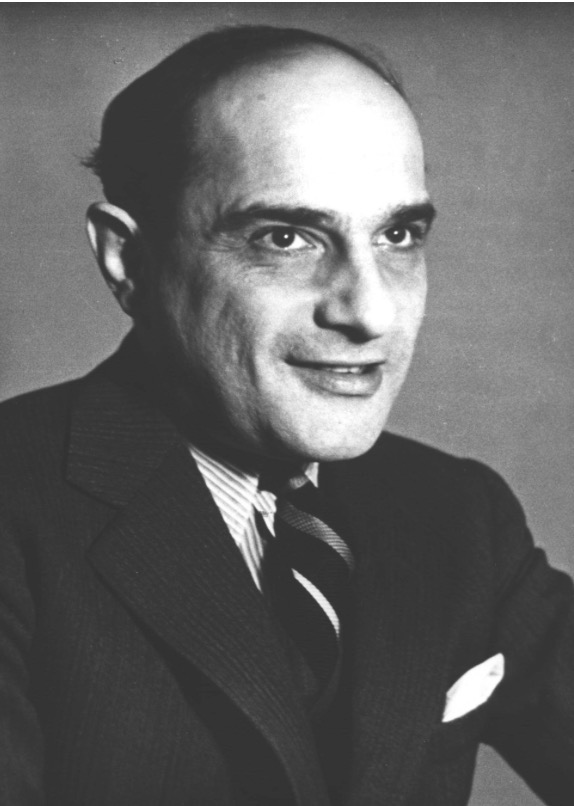
Brilliant lyricist Lorenz Hart
Richard Linklater’s Blue Moon (screenplay by Robert Kaplow), opens with a drunk Lorenz Hart staggering down an alley on a rainy night and collapsing. A voiceover then gives us the death announcement that went out on the New York Times radio station, WQXR, on November 22, 1943. The film then flashes back to March 31, 1943, the opening night of Rodgers and Hammerstein’s triumphant first collaboration, Oklahoma. Hart, bored and disgusted by what he sees as cornball hokum, leaves the theatre and goes down the block to Sardi’s bar.
Most biopics of classic composers or lyricists have given a much-doctored version of the artist’s life, often with lavish musical numbers. Blue Moon offers a fictionalized version of one sad night in the life of the celebrated lyricist. The only music is played by a barroom pianist.
If you don’t know, Lorenz Hart was Richard Rodger’s only collaborator for the first twenty years of his career. Rodgers and Hart were the most successful Broadway composers of their day, but Hart, an alcoholic, became increasingly unreliable, a thorn in the side of the very disciplined, chilly, Richard Rodgers (ironically, Rodgers later became an alcoholic). By the early 1940s, Rodgers realized that he had to find a new collaborator. He chose Oscar Hammerstein, II, another Columbia graduate who had been writing lyrics for twenty years but never had a hit show except for the 1927 classic Show Boat. Rodgers and Hammerstein became legendary both as artists and as businessmen who produced their own shows as well as hits like Annie Get Your Gun. Despite their success, Hammerstein never knew whether Rodgers liked him as a person.
In our piano bench in my childhood home was a thick volume of Rodgers and Hart songs. Each song is a classic in its own right: “Falling in Love with Love,” “Where or When,” “My Funny Valentine.” Hart’s lyrics are witty at a time when wit was prized by Broadway audiences. They are also melancholy, the utterances of a short (under five feet tall), homely, lonely homosexual. Drinking was a way of dealing with his self-loathing. Of course, this little, balding guy was attracted to tall blond men. Sex was often a cash transaction arranged with the help of Hart’s friend and procurer, Doc Bender.
I have written at length before on how Hart’s lyrics express his own experience as a homely man who has never experienced love (See my book, Something for the Boys: Musical Theater and Gay Culture).
The Lorenz Hart we see in Blue Moon is suffering unrequited love for a tall blond, but it’s a tall blond female Yale undergraduate who sees the older lyricist as someone she can confide in, but not a romantic partner. For the most part, their conversations involve him listening intently as she describes in detail her sexual experiences with men who aren’t interested in her. They sound like the exchanges of romantic and sexual horror stories many gay men have with their straight female best friends. In Blue Moon, Hart has no sexual confidences to share, and he is in love with the female Yale undergrad. This isn’t the first time Hollywood has made a gay songwriter heterosexual. Check out the Hollywood biopic about Cole Porter, Night and Day in which Cary Grant’s Cole only has eyes for his wife. Hart claims to love Elizabeth and wants to marry her (she’s twenty-eight years younger than he is), but what he really wants is a bond of friendship, “Maybe after a lifetime of colliding with strangers I have finally found a friend.” Perhaps this version of Lorenz Hart is bisexual. He confesses, “Larry Hart is drunk with beauty wherever he finds it.”
Hart talks pretty much nonstop from the moment he enters Sardi’s bar. He gets in a long conversation with writer E.B. White during which he gives White the idea for his children’s book, Stuart Little. Later he corners Richard Rodgers (Andrew Scott—odd casting) and tries to sell him on a musical about Marco Polo. Rodgers offers him work on a revival of their musical, A Connecticut Yankee in King Arthur’s Court, but will not deal any more with Hart’s benders and disappearances: “It’s a business, you know.” Oscar Hammerstein brings over his protégé, a young, precocious Stephen Sondheim who proceeds to utter the negative comments on Hart’s lyrics that Sondheim decades later wrote in his book, Finishing the Hat. Throughout the film, Hart knows deep down that his career is over. He says of a bottle on the bar, “The whiskey that made Lorenz Hart unemployable.” At the beginning of the film, he swears that he will control his drinking, but the success of Oklahoma! makes that resolution impossible to keep.
The writing is all very literate and often witty, but the reason to see the film is Ethan Hawke’s performance. Through some deft scene design and trick camera work, Hawke looks shorter than anyone else on the screen. The makeup is very convincing. More important, Hawke, turns Hart into a desperate man who knows how to charm. It is fun to be in his company, yet he knows he is doomed. Hawke is surrounded by an excellent supporting cast. Bobby Cannavale is charming as the kind bartender. Patrick Kennedy manages to look like E.B. White. Margaret Qualley is charming as the callow Yale undergrad. Hawke’s version of Hart managed to drink a lot of liquor and not seem drunk. Impressive!
As I watched Blue Moon, I kept asking myself who is the audience for this film? Who, apart from aficionados of golden age Broadway, cares about Lorenz Hart? Why avoid his homosexuality, a key aspect of his personality? One of Hart’s sexual partners remembered, “You’d wake up and find him in the closet. He’d get up out of bed and go sleep in the closet. Sex frightened him.” Another partner, Hollywood song and dance man Dan Dailey, said, “He disliked himself before and after sex and his partners during.” Rumor has it that he preferred watching to participating. Perhaps now it is politically incorrect to depict a self-hating homosexual, but the stigmas attached to same-sex love created many self-haters. It’s part of our past. Honesty would be better than turning him straightish.
By the way, Hart actually stayed until the end of Oklahoma! which he attended with his mother, with whom he lived. They went briefly to Sardis—just long enough for Hart to congratulate Rodgers. His beloved mother died the next month. Yes, it really doesn’t matter that the film strays from the facts. It does matter that it gives us little sense of Hart’s brilliance as a lyricist. That’s what is important about him.
One final question: Why is the piano music under the end titles by Cole Porter and Irving Berlin and not by Hart’s partner, Richard Rodgers?
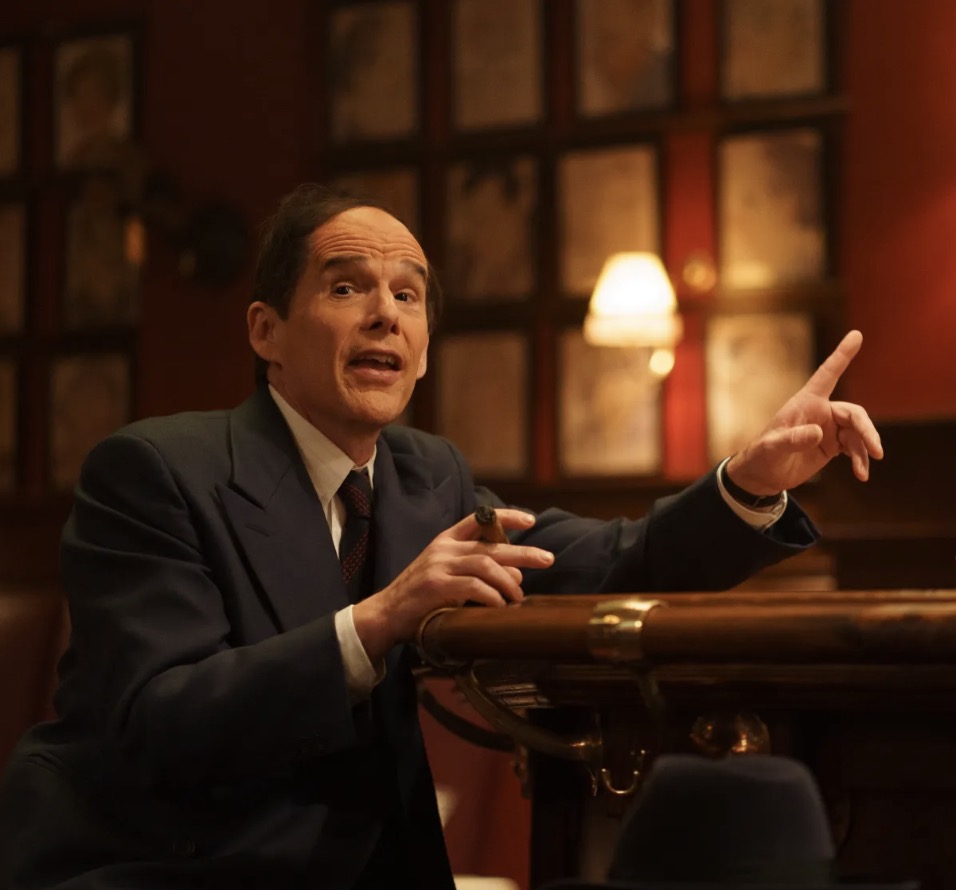
Ethan Hawke as Lorenz Hart
 John Clum's Theater, Music, Film and Media Reviews