I am amazed by how many conversations center on Heated Rivalry. Recently we had a meeting with our financial advisor, a straight guy we have known for decades, a devoted dad and grandfather. He and his wife, a physician, love Heated Rivalry and plan to watch season one again shortly before season two arrives a year or so from now. Recently I got into a long conversation with a gay friend who, like me, writes on gay theatre and musical theatre. Of course, Heated Rivalry came up. My friend was somewhat disturbed about the success of the show and what it said about what American and Canadian societies deem acceptable homosexuality. I don’t find this as bothersome as he does, but, as someone who has written books on gay representation on stage and screen, I felt the need to explore the subject.
Back in 1972, ABC presented a made-for-television movie, That Certain Summer, the first serious presentation of a homosexual couple on network television. When the network accepted Richard Levinson’s and William Link’s script, they insisted that there would be no physical contact between the gay couple—no kisses, hugs or even lingering eye contact—a far cry from the simulated sex of Heated Rivalry. The network also worried that the script was too “pro-gay” and demanded that the lead character say, “If I had a choice, it isn’t something I’d pick for myself.” Some gay activists were angry at the line. I thought that at a time in which gay men were vilified, few of us would wish for a life of secrecy and fear of exposure.
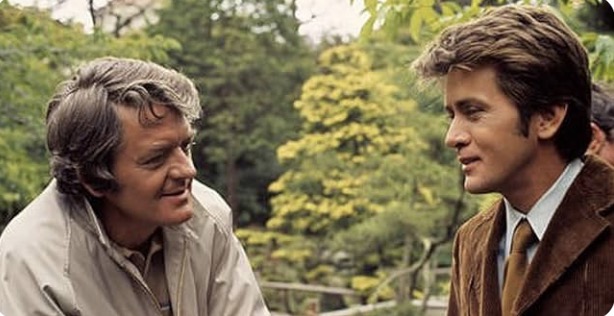
No touching!: Hal Holbrook and Martin Sheen in the first gay-positive tv drama
Hal Holbrook and Martin Sheen played the couple. Holbrook was already known as Mark Twain, and Sheen was at the beginning of his television career after some stage success.
Of course, the first television drama focusing on a gay couple takes place in San Francisco, the city that was a symbol of decadent urban life—sex, drugs and rock and roll. Folks in the heartland needn’t worry: gay men in television dramas live in big cities. They are also coupled just like heterosexuals. Doug is a building contractor, a solid masculine profession. The creators of That Certain Summer wanted to create an “acceptable” picture of gay men. They also wanted to show how difficult it was for gay men at the time to lead happy lives. There was always the fear of rejection and the pent-up anger that comes from condescension disguised as acceptance. In one of the most cogent moments, Doug’s partner Gary, is staying with his sister and brother-in-law while Doug’s fourteen-year-old son is visiting. When Gary’s oafish brother-in-law declares that Doug would be welcome in his home in a way that suggests that he is granting a big favor, Gary responds, “Look Phil, it’s nice of you to be broad-minded about me,” he says. “I appreciate your tolerance, really I do, but you’ll have to forgive me if I detect a whiff of patronization coming down with it… I’ve been getting it all my life, if it’s not from the militant straights, it’s well-intentioned liberals and their well-intentioned curiosity. Usually I can handle it, but today, I’m just a little touchy.” Gary’s response struck a chord with many of us at the time. Liberals expected gratitude for their “generosity.” Anti-gay conservatives expected respect for their prejudice. Honesty often invited rejection from family members.
So, over half a century later, Heated Rivalry offers us a group of gay men who are frightened to come out of the closet. They love and work in a culture that has no place for gay men. At the end of episode five, Scott Walker, captain of the championship team, the New York Metros invites his heretofore secret love onto the ice and kisses him in from of thousands of fans and millions watching on television. This event leads Ilya to call his secret lover Shane to tell him that he will be visiting Shane’s cottage at summer. We never find out how Scott’s team reacts to his spectacular coming out. Does he keep his lucrative product endorsements?
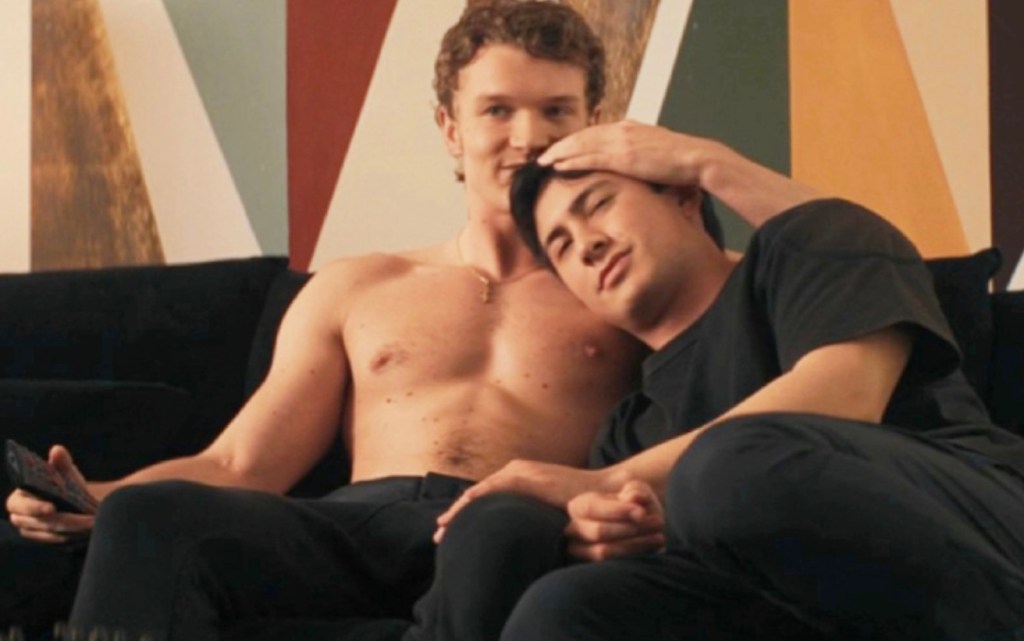
Loving gay hunks on Heated Rivalry
The closet is still a powerful force on Heated Rivalry. Hockey is a hyper-masculine sport, and homosexuality is seen as an affront against masculinity. This raises another question. Would Heated Rivalry be such an immense success if Shane and Ilya weren’t stars of a macho sport? Are they acceptable to millions of viewers because they are “straight-looking and acting”? I remember half a century ago when there was a big controversy about that fact that a lot of gay men who took out personal ads in gay newspapers (that was a big thing in the days before the internet) insisted that their partners be “straight-looking and acting.” The look in the pre-AIDS 1970s—what was called “the Clone look”—was t-shirt over a muscled body, tight Levis, and a mustache. The gym was called “gay church” because muscles were in. No skinny sissies, please! This was a reaction against the effeminate gay stereotype Hollywood offered for decades. Gay men could be real men.
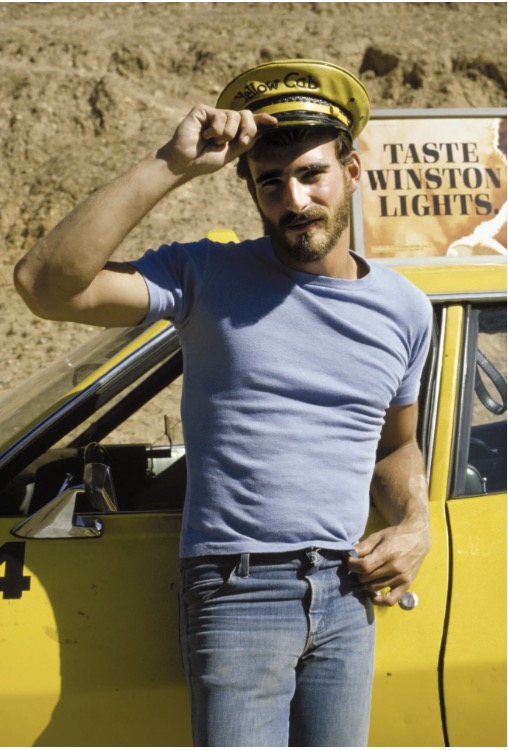
The 1970s gay clone look. “Straight looking and acting”
What about guys who preferred opera to leather, irony rather than pumping iron? Was there a place in gay culture for us? In An Early Frost, the best of the many television AIDS dramas in the 1980s, Michael, a successful young lawyer who lives in Chicago with his partner, contracts AIDS, which sends him home to middle-America and his disapproving, macho father. Worse, a stay in the hospital puts him in contact with a real nelly queen, and a non-upper-middle-class one at that, Victor, a former chef. At first, Michael is repelled by Victor, who not only bears the signs of Kaposi’s sarcoma, but also exhibits the signs of classic Hollywood homosexuality: effeminacy; self-protective wit, campiness, and a fondness for old Susan Hayward movies. Coming to accept—even like—Victor is coming to accept his disease and his own difference. Victor is anything but “straight-looking and acting.” Neither is Michael’s partner Peter, who runs a boutique filled with camp artifacts.

John Glover as Victor in An Early Frost.
Everyone in Heated Rivalry is straight looking and acting except, perhaps, Miles, the gay friend of Rose, the film star Shane briefly dates in an unsuccessful effort to be publicly heterosexual. Miles is also a Black man in a show that is almost totally white. Being openly gay in Heated Rivalry places one in a more diverse racial environment. Kip, Scott Walker’s openly gay lover, socializes almost totally with people of color.
“Straight-looking and acting” is still the norm. In Trumpland, gay men can be powerful if they are ultra-rich and super-macho, like our feisty Secretary of the Treasury. Heated Rivalry is a giant success in part because it’s about athletes. It’s even OK to prefer, as Shane does, what used to be called the submissive role in gay sex. Even the barista – part-time graduate student in art history Scott Walker is dating is musclebound.
I love Heated Rivalry, but I look back with delight and my time with non-straight-looking and acting gay men who were passionate about movies and music and art and were often devilishly funny. I remember irony.
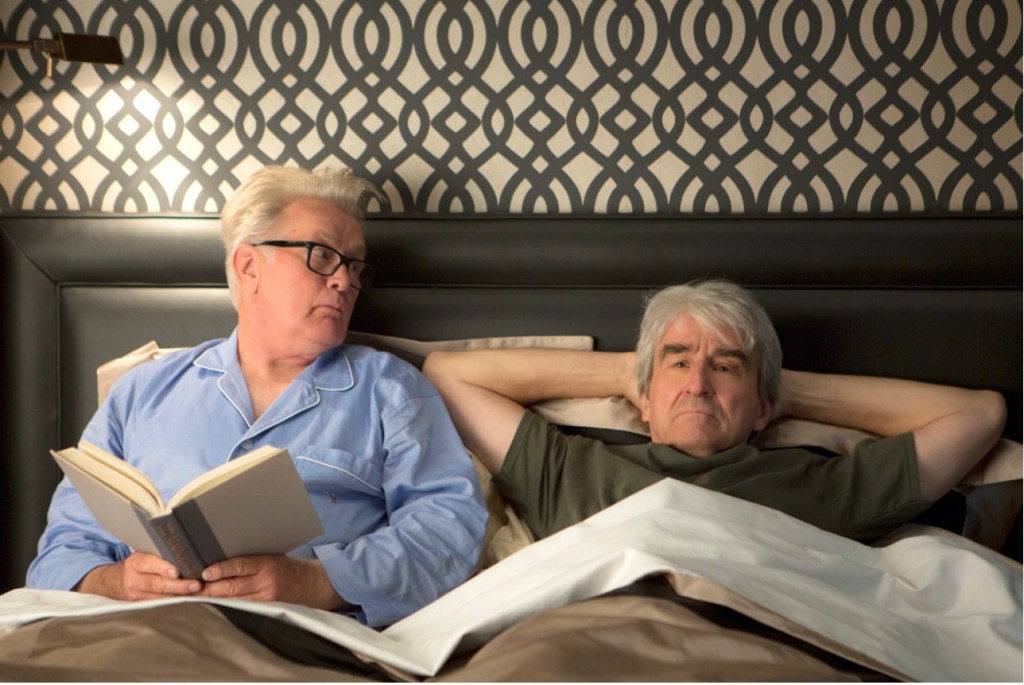
Martin Sheen and Sam Waterson as a gay couple on Grace and Frankie
A much older Martin Sheen played half of a gay couple (the partner was played by Sam Waterston) on the hilarious Netflix series Grace and Frankie. Sheen and Waterston played an old-fashioned gay couple who loved domesticity and amateur theatricals. Such non-macho gay men are relegated to comedy. Perhaps the best television depiction of Grand Old Queens was Ian McKellan and Derek Jacobi in the British series Vicious. I knew real-life versions of those two during my years in London. I never aspired to be like Shane or Ilya on Heated Rivalry. I would fit better in Freddie and Stuart’s living room on Vicious.
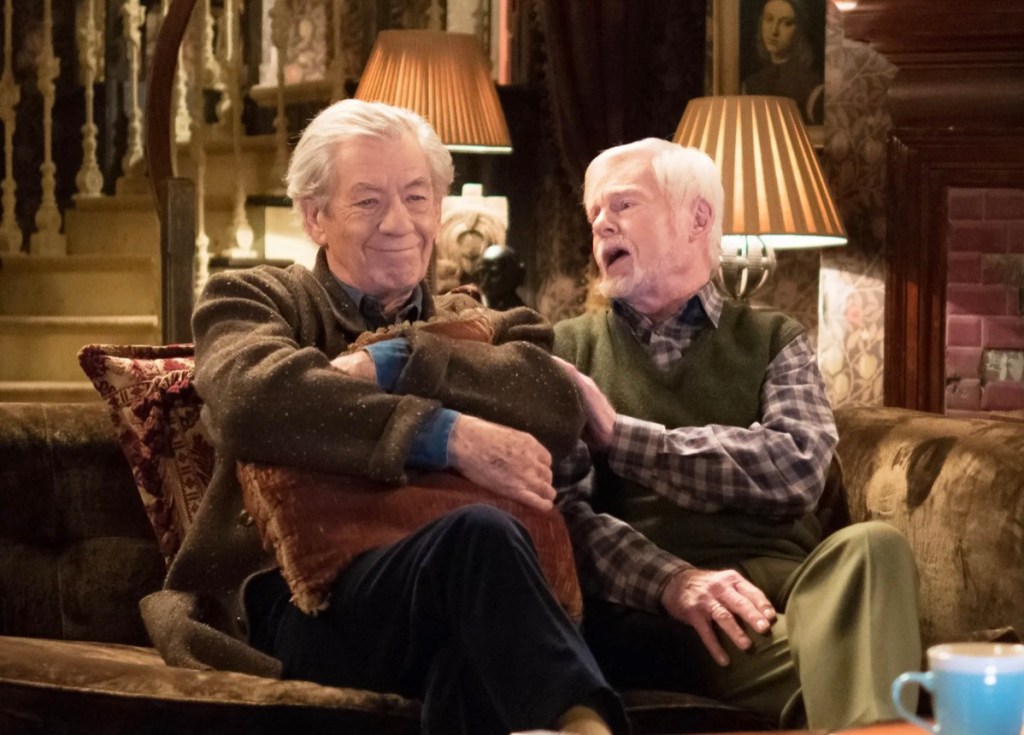
More my type: Ian McKellan and Derek Jacobi on Vicious
 John Clum's Theater, Music, Film and Media Reviews